 EN
EN

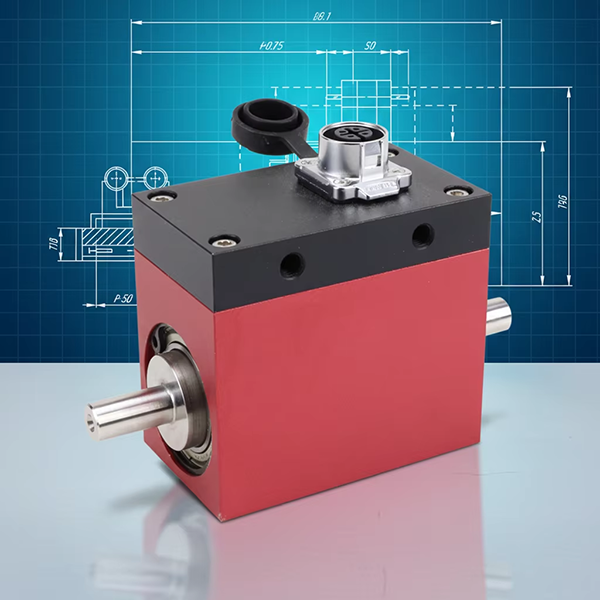
Dynamic torque sensors use the principle of strain electrical measurement to convert the deformation caused by torque into electrical signals, thereby enabling accurate measurement of torque in rotating power equipment.
A dynamic torque sensor, also known as a torque sensor or non-contact torque sensor, is a precision instrument used to measure the torque, rotational speed, and mechanical power of rotating power equipment. Its applications cover the testing of rotating power equipment such as motors, engines, and internal combustion engines; torque and power testing of fans, pumps, gearboxes, and torque wrenches; as well as areas like railway locomotives, automobiles, ships, mining machinery, wastewater treatment systems, viscometer manufacturing, and process industries.
This sensor uses strain gauge electrical measurement technology, converting torsional strain into electrical signals through a strain bridge composed of an elastic shaft, and outputs frequency signals after pressure-to-frequency conversion. The measurement range covers a standard range of 0–10,000 Nm and can be customized up to 200,000 Nm, with an error of less than 0.2% F.S. It supports both static and dynamic torque measurements, and the output signals include frequency, current, voltage, and digital quantities. It features no need for zero adjustment, strong anti-interference capabilities, and a compact size. The core technology types include strain type, phase difference type, and magnetoelastic type.
During installation, it is necessary to avoid strong electromagnetic interference, and the ambient temperature should be maintained within 0–60°C. Maintenance requires annual lubrication, and the use of rigid/flexible pin couplings is recommended to improve measurement accuracy.
Working Principle
The core principle of dynamic torque sensors is based on strain electrical measurement technology. When mechanical components (such as shafts) are subjected to torque, they undergo slight deformation, which causes changes in the resistance of strain gauges. Strain gauges are usually affixed to the sensor's torsion shaft and can directly measure the shaft's torque. The process is as follows:
- Strain Gauge Detection: The sensor contains one or more strain gauges, which are connected in a bridge circuit (such as a Wheatstone bridge) capable of accurately detecting resistance changes caused by torque.
- Signal Conversion: Changes in resistance are converted into corresponding voltage signals. These signals are then amplified, filtered, and processed to output an electrical signal proportional to the torque.
- Signal Output: The output signal can take various forms, such as frequency, current, or voltage, characterized by high precision, good stability, and strong anti-interference performance.
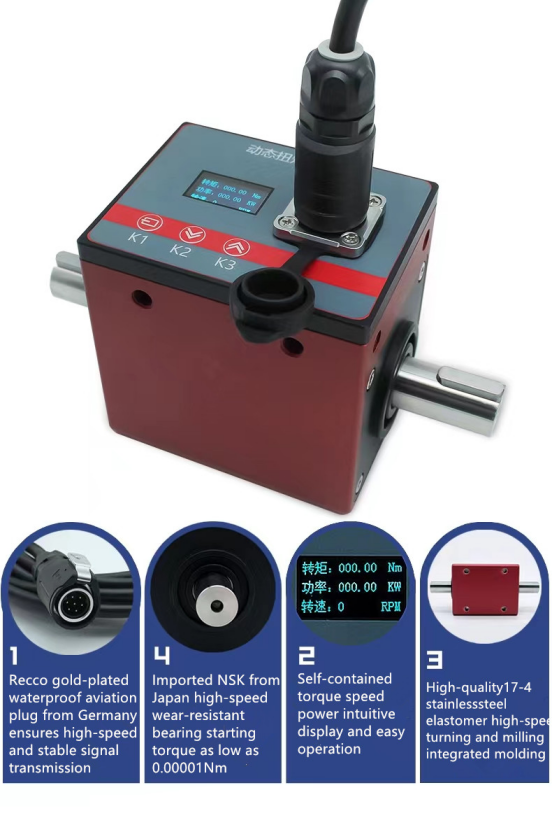
Structure Components
Dynamic torque sensors consist mainly of the following parts:
- Sensing Element: This is the core part of the sensor, typically made of high-elasticity, high-strength materials that can withstand significant stress without permanent deformation.
- Signal Processing Unit: This includes a signal amplifier, filter, and analog-to-digital converter, which process the weak signals output from the strain gauges.
- Data Transmission Module: Transmits the processed signals to display or recording equipment.
Applications
Dynamic torque sensors are widely used for torque and power detection in rotating power equipment such as electric motors, engines, and internal combustion engines. They are suitable for multiple fields including automotive, marine, mining machinery, and wastewater treatment systems. They also play an important role in industrial and process industries, helping to improve equipment efficiency and performance.
From the above introduction of principles and structures, it is clear that dynamic torque sensors are significant in modern industry and have extensive applications.