 EN
EN

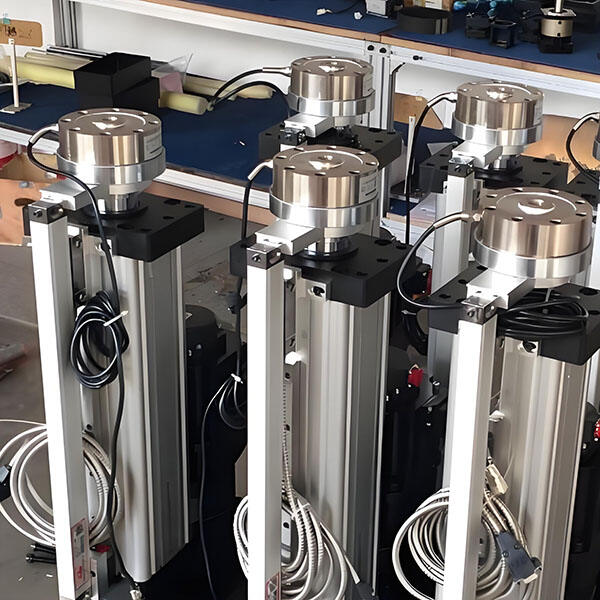
Load cells are force transducers that convert mechanical force into measurable electrical signals. They serve as critical components across numerous industries, from heavy construction to high-precision motorsports. Below are five representative case studies demonstrating how load cell technology solves real-world industrial challenges.
Case 1: Port Crane Load Monitoring
Application: A global oil and gas logistics company, ASCO, needed to monitor crane loads across supply bases in extreme environments ranging from Norway to Australia.
Challenge: Large distances between load links and receivers, signal obstruction by ship structures, and the need for supervisors to access weight data from anywhere in the harbor rather than just the control room.
Solution: Load Monitoring Systems developed custom load links integrating wireless telemetry instrumentation. The system pushed data to the web, allowing any cellular-enabled device to monitor readings via a dedicated web address.
Analysis: This case highlights how wireless load cell technology eliminates cabling requirements while maintaining signal integrity despite physical obstructions. Battery-powered units requiring replacement only every six months demonstrate practical field durability.
Case 2: London's Tower Bridge Load Balancing
Application: London's historic Tower Bridge, opened in 1894, required a solution to protect its aging bascule (drawbridge) mechanism from uneven loading caused by modern traffic volumes.
Challenge: The 1,000-ton bridge decks were experiencing uneven load distribution across main bearings due to misalignment and wear of locking pawls. Some bearings carried more load than others, threatening premature failure and potential bridge shutdown.
Solution: ABB installed Millmate Pressductor load cells (600-ton capacity) in replaceable resting blocks. These magnetoelastic sensors continuously measure load distribution, feeding 4-20 mA signals to a PLC. When imbalance is detected, hydraulic cylinders adjust block positions to equalize loads.
Analysis: This demonstrates load cells' role in predictive maintenance and structural health monitoring. The magnetoelastic principle—measuring magnetic permeability changes under mechanical stress—provides exceptional durability, withstanding overloads of 300-1000% of rated capacity while deflecting only 0.02-0.05mm under load.
Case 3: Formula 1 Braking Torque Measurement
Application: A Formula 1 motorsport company required accurate braking torque measurement during race conditions.
Challenge: The application demanded operation at 250°C with high-energy vibration and shock loads. A 3kNm braking torque produced 20kN reaction force at the brake caliper, shared between two load cells.
Solution: Novatech provided miniature shear beam load cells (10kN each) with high-temperature specifications and patented passive span drift compensation. FEA modeling validated the design before prototype production.
Analysis: This case illustrates specialized load cell design for extreme environments. Temperature compensation—addressing zero drift and sensitivity changes—is critical when sensors operate across wide thermal ranges. The matched-pair configuration counteracted differential expansion between caliper and structural components.
Case 4: Paper Mill Web Tension Control
Application: Paper machines producing one kilometer of five-meter-wide tissue per minute require precise web tension monitoring.
Challenge: Traditional strain gauge load cells suffered from drift, instability, and failure due to moisture, fumes, vibration, and temperature variations common in paper mills. Emergency stops and web breaks created overloads that destroyed conventional sensors.
Solution: ABB's Pressductor magnetoelastic load cells, which contain no moving parts, withstand overloads of 300-1000% without calibration loss. The 0.02-0.05mm deflection (10-100 times less than movement-based devices) ensures long-term reliability.
Analysis: The magnetoelastic approach eliminates mechanical fatigue as a failure mode. These sensors generate exceptionally strong signals resilient to electrical interference—critical when variable-frequency drives and wireless devices fill industrial environments.
Case 5: Quarry Material Weighing Integration
Application: Negeri Roadstone Malaysia quarry needed accurate weight measurement of sand and aggregate materials.
Challenge: Maintaining accuracy despite varying material distribution patterns and environmental conditions at the quarry site.
Solution: An integrated system combining load cells with ultrasonic sensors, using Node-RED platform for real-time data visualization. Load cells provided average weight measurements of 703.8g, 701.8g, and 702.5g—very close to the 700g actual sand weight.
Analysis: This hybrid approach demonstrates how load cells complement other sensor technologies. While load cells deliver direct force measurement, ultrasonic sensors aid volume estimation. The integration of IoT platforms enables remote monitoring and data analytics, reflecting the broader trend toward smart industrial systems.
Conclusion
These case studies reveal three key trends in load cell applications: wireless telemetry enabling remote monitoring in challenging environments (Case 1); specialized transducer technologies like magnetoelastic designs for extreme durability (Cases 2 and 4); and IoT integration for real-time data visualization (Case 5). When selecting load cells for demanding applications, engineers must consider not only rated capacity but also environmental factors including temperature extremes, shock loading, contamination risks, and signal integrity requirements.