 EN
EN

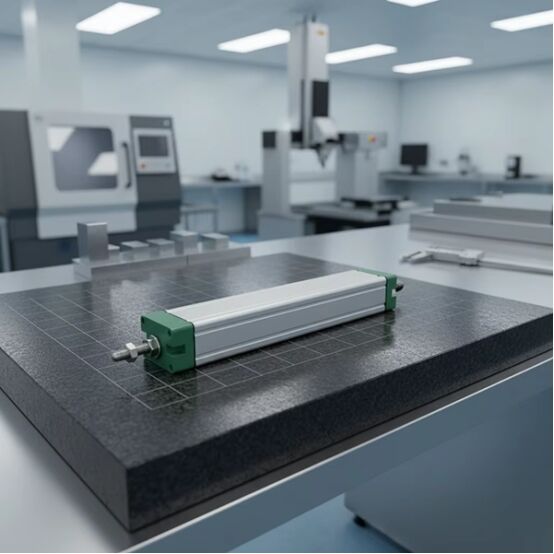
Selecting the appropriate linear transducer for precision measurement applications requires careful evaluation of multiple technical parameters and operational requirements. The decision impacts measurement accuracy, system reliability, and overall performance in critical industrial processes. Understanding the relationship between transducer specifications and application demands forms the foundation for making an informed choice that delivers consistent, reliable results across diverse measurement scenarios.
Precision measurement applications span numerous industries, from aerospace manufacturing to pharmaceutical production, where even minute deviations can compromise product quality or safety. The linear transducer serves as the critical interface between physical displacement and electrical signals, converting mechanical movement into measurable data. The selection process involves analyzing measurement range requirements, accuracy specifications, environmental conditions, and integration constraints to identify the optimal solution for each specific application.
Understanding Linear Transducer Operating Principles
Fundamental Measurement Mechanisms
A linear transducer operates by detecting changes in position along a linear axis and converting these mechanical displacements into proportional electrical signals. The most common technologies include resistive, inductive, capacitive, and optical measurement principles, each offering distinct advantages for specific application requirements. Resistive linear transducers utilize a precision potentiometer mechanism where a wiper moves along a resistance track, producing voltage output proportional to position changes.
Inductive linear transducers employ magnetic coupling between primary and secondary coils to generate position-dependent signals without physical contact between moving parts. This contactless operation provides exceptional durability and reliability in harsh industrial environments. Capacitive systems measure changes in capacitance between electrodes as the target moves, offering high resolution and stability for precision applications requiring minimal mechanical loading.
Signal Processing and Output Characteristics
Modern linear transducer designs incorporate sophisticated signal conditioning circuits to enhance measurement accuracy and reduce environmental interference. Analog output formats typically provide voltage or current signals proportional to displacement, while digital interfaces offer enhanced noise immunity and direct integration with computerized control systems. The choice between analog and digital output depends on system architecture, transmission distances, and processing requirements.
Temperature compensation mechanisms within the linear transducer help maintain accuracy across varying environmental conditions. Advanced models include internal calibration algorithms that automatically adjust for thermal effects, mechanical wear, and aging-related drift. These features ensure long-term measurement stability essential for precision applications where consistency over extended periods directly impacts product quality and process control effectiveness.
Critical Specification Parameters for Selection
Measurement Range and Resolution Requirements
Determining the appropriate measurement range represents a fundamental step in linear transducer selection, requiring analysis of both maximum displacement requirements and the precision needed for detecting small position changes. The measurement range must accommodate the full scope of expected movement while providing adequate resolution for the smallest changes that require detection. Oversizing the range can compromise resolution, while undersizing risks measurement limitations or system damage.
Resolution specifications define the smallest displacement change the linear transducer can reliably detect and report. This parameter directly correlates with measurement precision and system capability to identify minute position variations. Applications requiring high precision typically demand resolution in the micrometer range or better, necessitating careful evaluation of transducer technology and signal processing capabilities.
Accuracy and Linearity Specifications
Accuracy specifications define how closely the linear transducer output corresponds to actual displacement values across the entire measurement range. This parameter encompasses both systematic errors and random variations that affect measurement reliability. Precision applications often require accuracy specifications better than 0.1% of full scale, demanding careful attention to calibration procedures and environmental factors that influence performance.
Linearity characteristics describe how closely the output signal follows a straight-line relationship with input displacement. Non-linearity can introduce measurement errors that vary across the range, potentially compromising system performance in applications requiring consistent accuracy throughout the operating envelope. Independent linearity specifications typically provide the most meaningful performance indicator for precision measurement applications.
Environmental and Mechanical Considerations
Operating Environment Assessment
Environmental conditions significantly influence linear transducer performance and longevity, requiring comprehensive evaluation of temperature ranges, humidity levels, vibration exposure, and potential contamination sources. Temperature variations affect both mechanical dimensions and electrical characteristics, potentially introducing measurement errors if not properly compensated. Industrial environments often present temperature swings that exceed standard operating ranges, necessitating specialized transducer designs or environmental protection measures.
Vibration and shock conditions in industrial settings can interfere with linear transducer operation and potentially damage sensitive internal components. High-frequency vibrations may introduce noise into measurement signals, while shock loads can cause mechanical failure or calibration shifts. Selecting transducers with appropriate vibration tolerance and shock resistance ensures reliable operation in demanding industrial environments.
Mechanical Integration Requirements
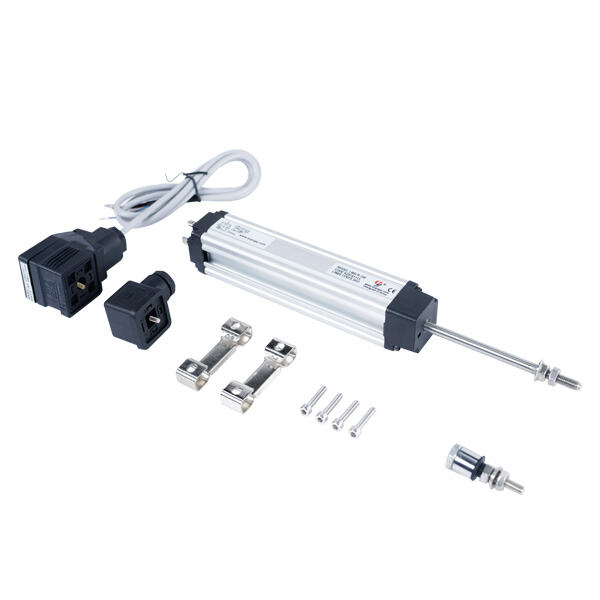
Mechanical mounting considerations play a crucial role in linear transducer selection and installation success. The transducer must integrate seamlessly with existing equipment while maintaining proper alignment and minimizing mechanical loading that could affect measurement accuracy. Mounting flexibility requirements vary significantly between applications, with some needing rigid fixed-base installation while others require articulated connections to accommodate angular misalignment.
Physical size constraints often limit transducer options in space-restricted applications, requiring careful evaluation of available mounting space and clearance requirements. Compact linear transducer designs sacrifice some performance characteristics to achieve reduced size, making it essential to balance space limitations against accuracy and range requirements. Rod-end connections and flexible mounting options can help accommodate installation challenges while maintaining measurement integrity.
Application-Specific Selection Criteria
Industrial Process Monitoring
Industrial process monitoring applications require linear transducers capable of continuous operation under demanding conditions while providing reliable feedback for automated control systems. These applications often involve monitoring cylinder positions, valve stem travel, or conveyor positioning where accuracy directly impacts product quality and process efficiency. The linear transducer must demonstrate exceptional reliability and minimal maintenance requirements to avoid production disruptions.
Response time characteristics become critical in dynamic process control applications where rapid position changes require immediate detection and system response. Fast-acting processes demand linear transducers with high-frequency response capabilities and minimal signal lag. Slower processes may prioritize stability and accuracy over speed, allowing for different transducer technologies and signal processing approaches.
Quality Control and Testing Systems
Quality control applications demand exceptional accuracy and repeatability from linear transducers used in dimensional measurement, material testing, and product inspection systems. These applications often require measurement uncertainties well below typical industrial tolerances, necessitating careful attention to calibration procedures, environmental control, and measurement traceability. The linear transducer becomes a critical component in ensuring product conformance to specifications.
Testing system applications frequently involve cyclic loading or repetitive measurements that stress transducer components over extended periods. Durability and long-term stability become paramount considerations, requiring evaluation of wear mechanisms, fatigue resistance, and drift characteristics. High-cycle applications may necessitate specialized transducer designs optimized for extended operation without performance degradation.
Integration and Compatibility Factors
Electrical Interface Requirements
Electrical compatibility between the linear transducer and existing control systems determines integration complexity and overall system performance. Signal levels, impedance characteristics, and power requirements must align with available interface capabilities to ensure proper operation. Mismatched electrical specifications can result in signal attenuation, noise susceptibility, or inadequate measurement resolution.
Communication protocol compatibility becomes increasingly important in modern automated systems utilizing digital interfaces and networked control architectures. Standard protocols like Ethernet, RS-485, or proprietary bus systems require specific transducer capabilities and configuration options. Digital communication offers advantages in noise immunity and data integrity but may introduce complexity in system setup and troubleshooting procedures.
Maintenance and Calibration Considerations
Maintenance requirements significantly impact total cost of ownership for linear transducer installations, making this a crucial selection factor for long-term system viability. Contactless measurement technologies typically require less maintenance than mechanical systems, while sealed designs provide better protection against contamination and environmental degradation. Regular calibration intervals and procedures must align with operational schedules to minimize production interruptions.
Field serviceability and replacement procedures affect system availability and maintenance costs over the transducer lifecycle. Modular designs that allow component replacement or field calibration provide operational advantages in critical applications where downtime carries significant consequences. Documentation quality and technical support availability also influence the practical aspects of long-term system operation and troubleshooting.
FAQ
What is the most important factor when selecting a linear transducer for precision applications?
The most critical factor is ensuring the transducer's accuracy and resolution specifications meet or exceed the application's measurement requirements. This involves carefully analyzing the smallest displacement changes that must be detected and the acceptable measurement uncertainty across the entire operating range. Environmental conditions and long-term stability requirements are equally important considerations.
How does environmental temperature affect linear transducer performance?
Temperature variations can significantly impact linear transducer accuracy through thermal expansion of mechanical components and temperature-dependent electrical characteristics. Quality transducers incorporate temperature compensation mechanisms to minimize these effects, but extreme temperatures may still require additional environmental protection or specialized transducer designs rated for extended temperature ranges.
Can a linear transducer be recalibrated if accuracy degrades over time?
Most linear transducers can be recalibrated to restore original accuracy specifications, though the specific procedures vary by manufacturer and design. Some advanced models include built-in calibration capabilities that allow field adjustment, while others require factory service or specialized calibration equipment. Regular calibration schedules help maintain measurement integrity and identify potential issues before they affect system performance.
What are the advantages of digital output linear transducers compared to analog versions?
Digital output linear transducers offer superior noise immunity, enhanced accuracy over long transmission distances, and direct integration with modern control systems. They eliminate analog-to-digital conversion errors and provide additional diagnostic information about transducer health and operating status. However, analog outputs may be preferred for simple applications or when interfacing with legacy systems that lack digital input capabilities.
Table of Contents
- Understanding Linear Transducer Operating Principles
- Critical Specification Parameters for Selection
- Environmental and Mechanical Considerations
- Application-Specific Selection Criteria
- Integration and Compatibility Factors
-
FAQ
- What is the most important factor when selecting a linear transducer for precision applications?
- How does environmental temperature affect linear transducer performance?
- Can a linear transducer be recalibrated if accuracy degrades over time?
- What are the advantages of digital output linear transducers compared to analog versions?