 EN
EN


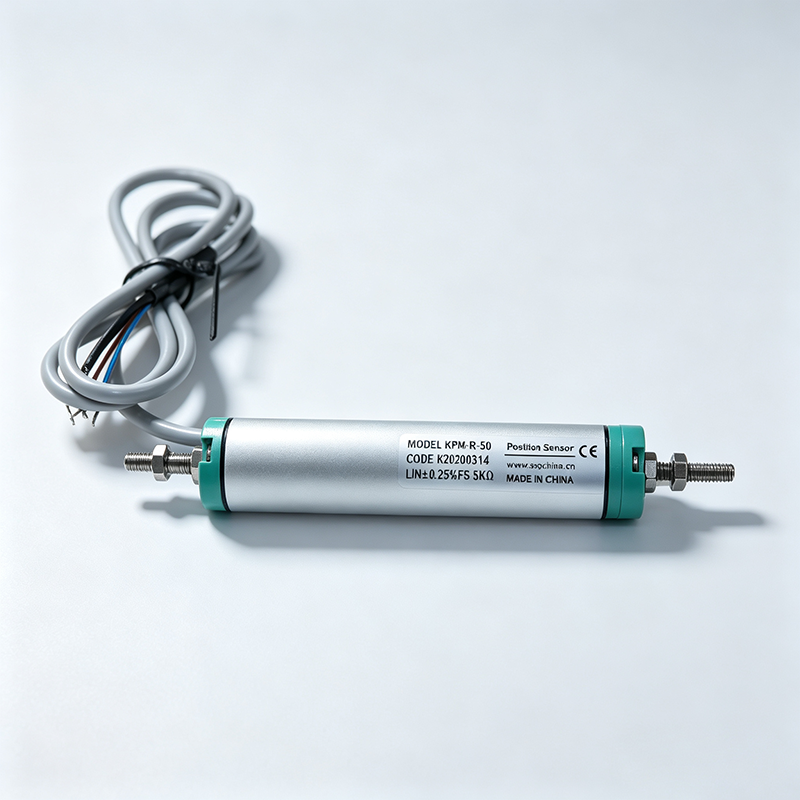
Applications of KPM Linear Displacement Sensor
The KPM series linear displacement sensor is a compact hinged potentiometric position transducer with dual fish-eye rod ends. Its unique articulated design compensates for minor angular deflection and installation misalignment, eliminating the strict requirement for perfect coaxial alignment. Built with conductive plastic resistive elements, it delivers stable analog output, excellent linearity and long service life, making it widely adopted for real-time position feedback across diverse industrial sectors.
In plastic machinery, KPM sensors serve as core position feedback components for injection molding and die-casting machines. They monitor mold clamping, mold opening and ejector pin strokes precisely. Accurate displacement data helps the PLC control system stabilize mold movements, reduce product defects and improve repeatability of molded parts. Shoe-making machines and rubber processing equipment also rely on KPM sensors to control piston travel and ensure consistent forming quality.
Hydraulic and construction machinery is another major application field. Mounted on hydraulic cylinders, the sensor measures piston stroke and provides closed-loop feedback for hydraulic synchronization systems. It works well on boom actuators, lifting equipment and hydraulic jacks. The hinged structure absorbs lateral force and swing motion during operation, protecting the sensor from mechanical damage under vibration and dynamic load.
For industrial automation and robotics, KPM sensors are installed on manipulators, material handling machines and automated assembly lines. They track joint displacement and linear actuator movement, supporting motion synchronization and precise positioning. Thanks to its small footprint, it fits in confined installation spaces that cannot accommodate large rigid sensors.
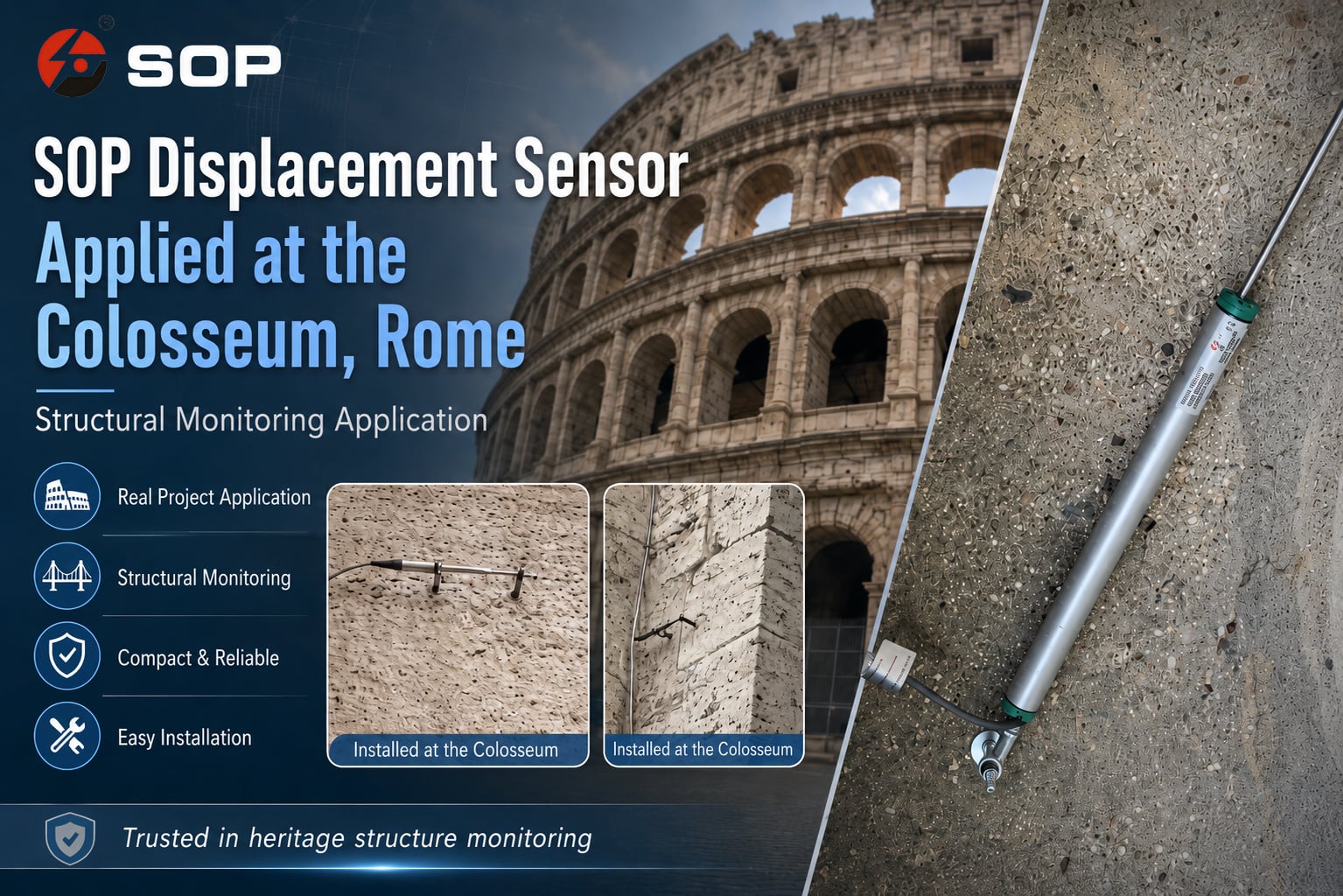
Besides, the KPM sensor is popular in ceramic machinery, brick-making equipment, water gate control and material testing instruments. It monitors pushing rod displacement and structural deformation. Standard analog signals including 0-5V, 0-10V or 4-20mA enable easy integration with most industrial controllers. With robust aluminium housing and reliable sealing, it withstands dust and moisture in tough workshop environments.
From molding production to hydraulic control and automated robotics, the KPM linear displacement sensor offers a cost-effective, dependable solution for measuring linear motion. Its flexible mounting, compact size and stable performance make it a preferred choice for OEM machine builders worldwide.
Racing vehicles demand extreme precision, dynamic stability, and durable components to withstand high-speed operation, intense vibration, and harsh on-track conditions. The KPM linear displacement sensor stands out as an ideal positioning solution for professional racing car modification and performance testing, offering unique structural and performance advantages that perfectly match racing scenarios.
First and foremost, its articulated fish-eye rod end design is highly tailored for racing mechanical movement. Unlike rigid sensors that require strict coaxial installation, the KPM sensor’s flexible hinged structure automatically compensates for minor angular deviations, lateral swings, and installation misalignment. Racing suspension, throttle, and brake systems produce frequent irregular micro-movements during high-speed driving; this self-alignment feature effectively eliminates mechanical jamming and signal distortion, ensuring continuous and accurate displacement feedback without compromising dynamic travel.
High-precision and ultra-stable signal output is another core racing advantage. With excellent linearity up to ±0.05% FS and infinite resolution, the KPM sensor captures tiny displacement changes of suspension travel, brake pedal stroke, and throttle opening in real time. It supports a maximum movement speed of 5m/s, fully adapting to the rapid mechanical response requirements of racing cars. The stable analog output guarantees consistent data transmission, helping racing ECU achieve precise dynamic calibration, improve vehicle handling sensitivity, and optimize acceleration and braking performance.
Additionally, the compact, lightweight structure suits racing’s lightweight design principle. It saves limited installation space in compact racing cockpits and mechanical structures while boasting an ultra-long service life of over 50 million cycles. Easy to install and calibrate, the KPM sensor delivers reliable, high-performance positioning support for racing vehicle debugging, real-time monitoring, and performance optimization.