 EN
EN


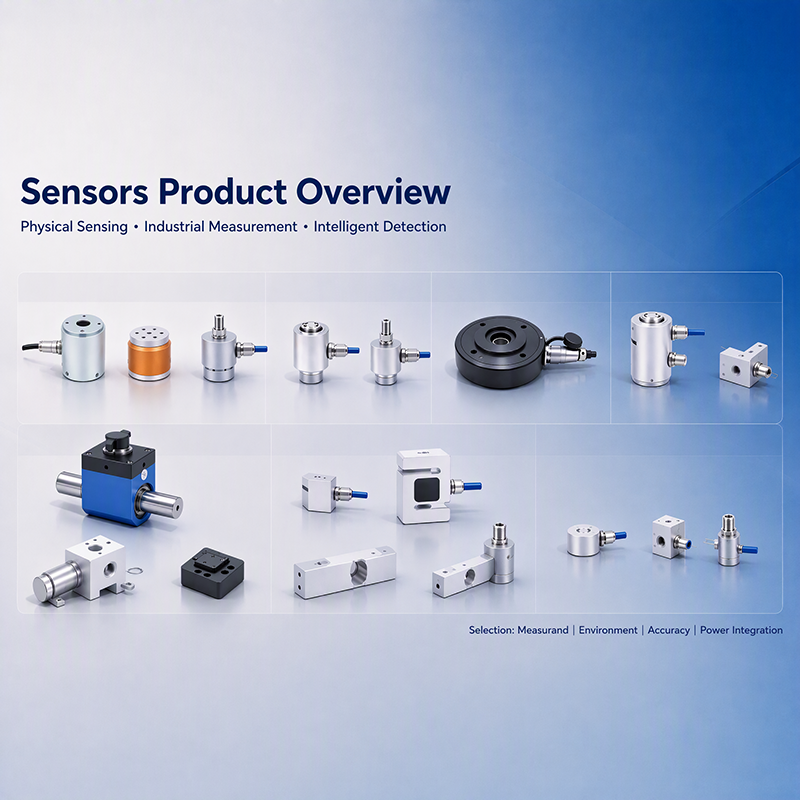
Sensor Types and Their Practical Deployment Across Industries
Sensors act as bridges between physical phenomena and digital decision-making. They transform temperature, pressure, motion, light, gases, and biological signals into electrical outputs that systems can process. Because requirements vary widely—accuracy, response speed, durability, power consumption, and cost—engineers choose different sensing principles for different jobs. The following sections examine major sensor categories and show where each is used in practice.
Temperature and humidity sensors
Temperature measurement often relies on thermocouples, resistance temperature detectors, or thermistors. In vaccine distribution, continuous temperature logging protects delicate biologics from spoilage. Data centers use them to prevent server overheating, while industrial furnaces depend on high-temperature probes for process control. Humidity sensors, usually capacitive or resistive, monitor moisture in cleanrooms, museums, and greenhouses. In HVAC systems, paired temperature-humidity readings maintain comfort and energy efficiency.
Pressure and flow sensors
Pressure sensors convert force per area into signals using piezoresistive, capacitive, or optical methods. Automotive tire-pressure monitoring systems warn drivers about underinflation. Medical infusion pumps measure pressure to avoid blockages or overdosing. Underwater vehicles use pressure sensors for depth control, and process plants detect leaks by tracking pressure drops. Flow sensors—ultrasonic, electromagnetic, or thermal—measure liquid or gas movement. Water utilities use them for leak detection and billing, while ventilators rely on precise flow measurement to deliver safe breathing support.
Motion and proximity sensors
Accelerometers and gyroscopes track acceleration, tilt, rotation, and vibration. Smartphones use them for screen orientation and step counting. Vehicles employ them for electronic stability control and crash detection. In industry, vibration monitoring predicts bearing failures before breakdowns occur. Proximity sensors detect nearby objects without contact. Inductive types sense metal in factory automation; capacitive types enable touchscreens and touchless faucets; ultrasonic types assist parking and robotic navigation. These sensors improve safety and user interaction in consumer, automotive, and manufacturing settings.
Gas and chemical sensors
Gas sensors identify hazardous or relevant gases through electrochemical, metal-oxide, or infrared principles. Residential carbon monoxide detectors prevent poisoning, while industrial facilities monitor methane, hydrogen sulfide, and volatile organic compounds to protect workers. Indoor air quality systems adjust ventilation based on CO2 levels. Chemical sensors also support breath analysis, food freshness testing, and water contamination monitoring. In medical diagnostics, they enable point-of-care devices that detect biomarkers from small samples.
Optical and biomedical sensors
Photodiodes, CMOS image sensors, and LiDAR measure light and distance. They power barcode scanners, autonomous vehicle perception, and medical imaging. Biomedical sensors, including photoplethysmography and electrochemical glucose sensors, track heart rate, oxygen saturation, and glucose levels. Wearables use them for remote patient monitoring, while lab-on-chip platforms perform rapid diagnostics outside hospitals.
Magnetic and position sensors
Hall-effect and magnetoresistive sensors detect magnetic fields, enabling wheel-speed measurement, motor commutation, and position feedback in robotics. Reed switches provide simple proximity detection in security systems. In automotive and industrial drives, these sensors help control electric motors with high efficiency. They are also used in smartphones for compass functions and in medical devices for precise actuator positioning.
Conclusion
No single sensor fits every application. Selection depends on the physical quantity, operating environment, required precision, and integration constraints. Modern systems increasingly combine multiple sensors through fusion algorithms, improving reliability and context awareness. As devices become smaller, more energy-efficient, and capable of edge processing, sensor networks will continue to expand into smart cities, precision agriculture, personalized medicine, and autonomous machines. The key is matching the sensing principle to the real-world scenario, rather than adopting a one-size-fits-all solution.