EN
EN


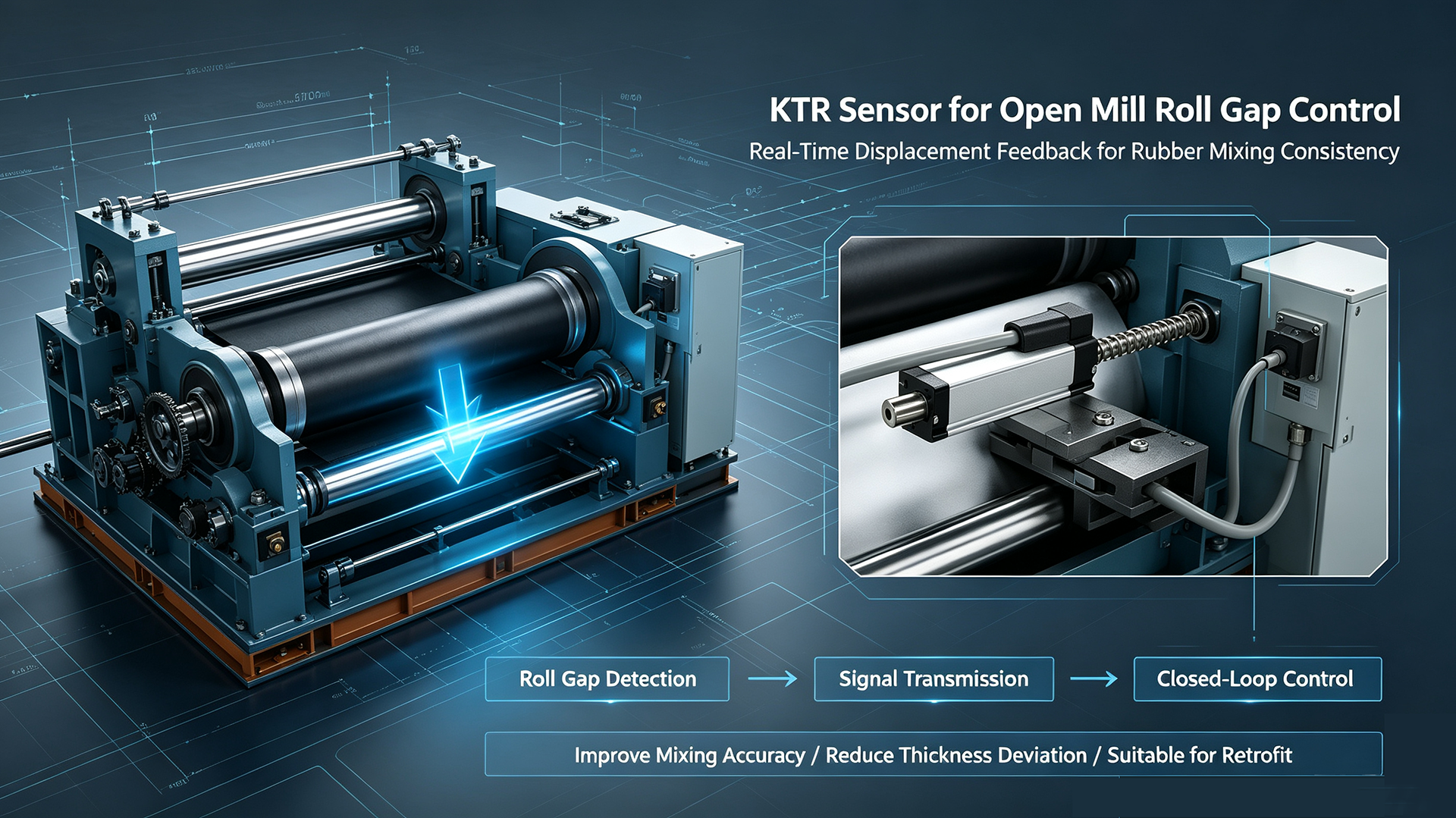
Application of KTR Mini Self-Recover Linear Displacement Sensor on Rubber Open Mill
The two-roll open mill is core equipment for rubber and silicone plasticating and mixing. The roll gap directly controls the shearing and thinning effect of rubber stock, and consistent clearance determines the stability of mixed compound quality. Traditional mechanical limit monitoring suffers low precision and signal lag, easily causing roll gap deviation and uneven rubber thickness. Many rubber manufacturers adopt the KTR Mini Self-Recover Linear Displacement Sensor for real-time roll gap detection and closed-loop control, improving the precision of mixing processes.
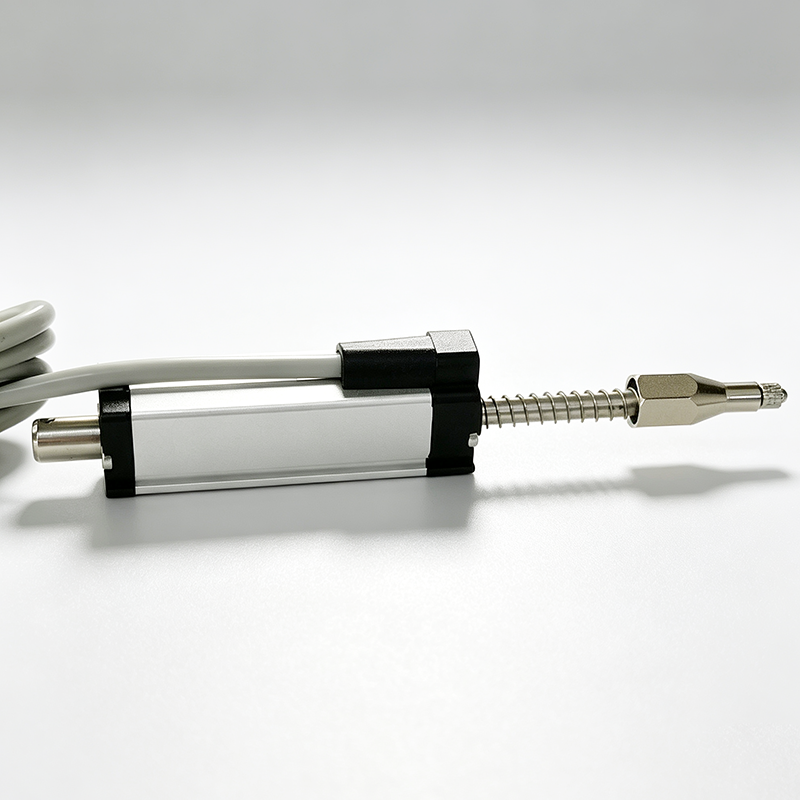
The KTR linear displacement sensor features multiple advantages well-matched to open mill working conditions. It has a compact mini size, convenient for installation within narrow frame space. Built with a self-return spring, it fits pushrod-style equipment without complicated mounting or precise alignment. It delivers ultra-long service life, with mechanical cycles exceeding tens of millions. Rated IP54 protection, it resists dust and slight oil contamination in rubber workshops. It stays stable against external impact and vibration, adapting to continuous shaking during mill operation. It adopts direct cable outlet for simple wiring, and supports optional voltage/current (2-wire, 3-wire) modules or RS485 output for seamless PLC connection.