 EN
EN

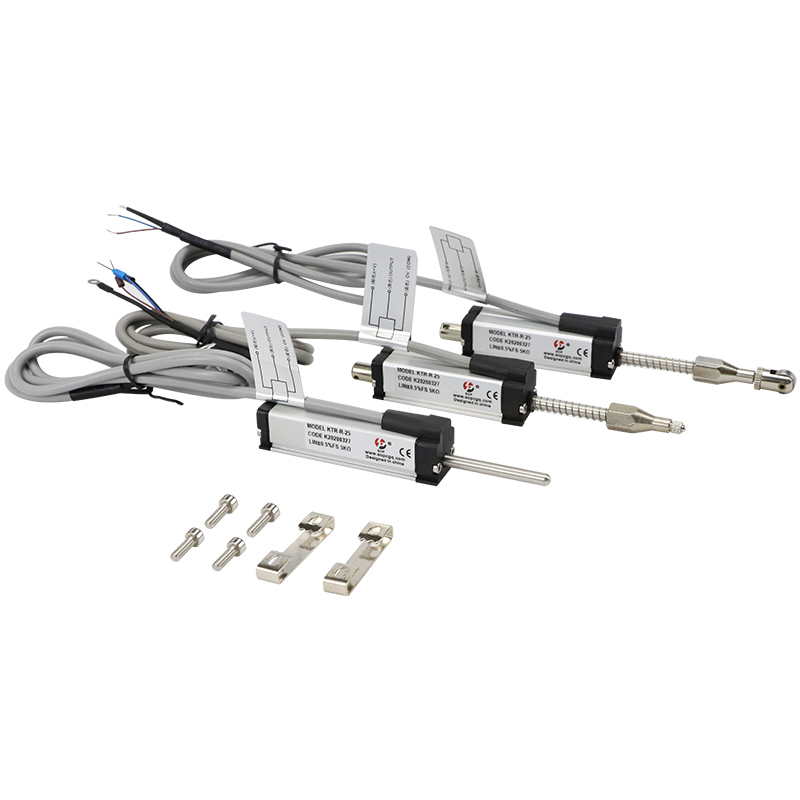
High-speed inspection stations represent the pinnacle of modern manufacturing quality control, where precision and speed converge to ensure product excellence. At the heart of these sophisticated systems lies a critical component that enables accurate measurements and reliable performance: the linear displacement sensor. This advanced sensing technology has become indispensable for manufacturers seeking to maintain competitive advantages through enhanced quality assurance processes. Linear displacement sensors provide the foundational measurement capabilities that allow inspection stations to operate at unprecedented speeds while maintaining exceptional accuracy standards that modern industries demand.
Fundamental Role of Linear Displacement Sensors in Modern Inspection Systems
Core Measurement Capabilities
Linear displacement sensors serve as the primary measurement interface between physical components and digital control systems in high-speed inspection environments. These devices convert mechanical displacement into electrical signals that processing units can interpret and analyze in real-time. The precision of a linear displacement sensor directly impacts the overall accuracy of dimensional measurements, surface profiling, and geometric validation processes. Modern inspection stations rely on these sensors to detect variations as small as micrometers while maintaining consistent performance across thousands of measurement cycles per minute.
The technological advancement in linear displacement sensor design has enabled manufacturers to achieve measurement resolutions that were previously impossible at high operational speeds. Contemporary sensors incorporate advanced signal processing algorithms that filter noise and compensate for environmental factors that could affect measurement accuracy. This enhanced capability allows inspection stations to maintain tight tolerance requirements even when operating at maximum throughput rates, ensuring that quality standards remain uncompromised regardless of production velocity.
Integration with High-Speed Control Systems
Seamless integration between linear displacement sensors and control systems forms the backbone of efficient inspection operations. These sensors must communicate measurement data instantaneously to ensure that control systems can make real-time decisions about product quality and process adjustments. The electrical interface design of modern linear displacement sensors accommodates various communication protocols, enabling compatibility with diverse control architectures and industrial automation standards.
Signal conditioning and data transmission capabilities of linear displacement sensors have evolved to support high-frequency sampling rates required by fast-moving inspection applications. Advanced sensors feature built-in amplification circuits and digital communication interfaces that eliminate signal degradation over long cable runs. This technological sophistication ensures that measurement data maintains integrity throughout the entire signal path from sensor to control system, enabling precise decision-making at inspection speeds that continue to increase across various manufacturing sectors.
Performance Advantages in High-Speed Applications
Response Time Optimization
The response time characteristics of a linear displacement sensor determine the maximum operational speed achievable by inspection stations without sacrificing measurement accuracy. Modern sensors incorporate low-mass sensing elements and optimized mechanical designs that minimize inertial effects during rapid position changes. These engineering improvements enable sensors to track fast-moving components accurately while maintaining stable output signals that control systems can process reliably.
Dynamic response optimization in linear displacement sensors involves careful consideration of mechanical resonance frequencies and damping characteristics. Manufacturers design these sensors to operate well below their natural resonance frequencies, ensuring that mechanical vibrations and high-frequency disturbances do not compromise measurement stability. This design philosophy allows inspection stations to operate at maximum speeds while maintaining measurement confidence levels required for critical quality control applications.
Accuracy Maintenance Under Dynamic Conditions
Maintaining measurement accuracy during high-speed operations presents unique challenges that linear displacement sensors must overcome through advanced design features. Temperature compensation circuits ensure that thermal variations do not affect measurement precision, while shock and vibration resistance capabilities protect sensitive internal components from mechanical stress. These protective measures enable sensors to deliver consistent performance throughout extended operation periods, even in demanding industrial environments.
Calibration stability represents another critical aspect of linear displacement sensor performance in high-speed applications. Advanced sensors incorporate self-diagnostic capabilities that monitor internal operating parameters and provide early warning indicators when recalibration becomes necessary. This predictive maintenance approach minimizes unexpected downtime and ensures that inspection stations maintain their specified accuracy levels throughout their operational lifecycle, supporting continuous production requirements in modern manufacturing facilities.
Technical Specifications and Selection Criteria
Measurement Range and Resolution Requirements
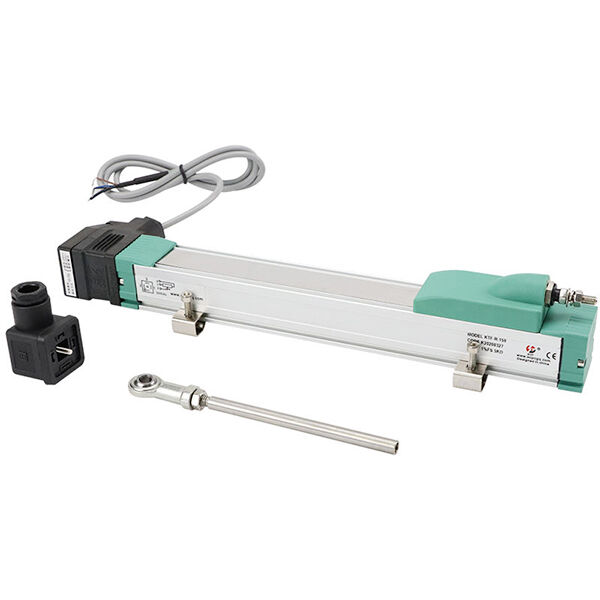
Selecting appropriate measurement range specifications for a linear displacement sensor requires careful analysis of inspection station requirements and component geometries. The sensor must accommodate the full range of expected component variations while providing sufficient resolution to detect the smallest acceptable dimensional changes. Overspecification of measurement range can negatively impact resolution and response time, while underspecification limits the sensor's ability to handle normal manufacturing variations effectively.
Resolution requirements for linear displacement sensors in high-speed inspection applications typically demand sub-micron capabilities to ensure adequate measurement discrimination. Modern sensors achieve these resolution levels through advanced signal processing techniques and high-precision sensing elements that maintain stability across wide operating temperature ranges. The relationship between measurement range and resolution must be optimized to provide the best possible measurement performance for specific inspection requirements.
Environmental Resistance and Durability
Industrial inspection environments expose linear displacement sensors to various challenging conditions including temperature extremes, humidity variations, electromagnetic interference, and mechanical shock. Sensor housing materials and sealing systems must provide adequate protection against these environmental factors while maintaining measurement accuracy and long-term reliability. Stainless steel housings with appropriate ingress protection ratings ensure that sensors can operate effectively in harsh manufacturing environments.
Electromagnetic compatibility becomes increasingly important as inspection stations incorporate more sophisticated electronic control systems and communication networks. Linear displacement sensors must maintain measurement accuracy in the presence of electrical noise generated by motors, drives, and other industrial equipment. Advanced shielding techniques and noise filtering circuits protect sensitive measurement circuits from external interference, ensuring consistent performance in electromagnetically challenging environments.
Implementation Strategies for Optimal Performance
Mechanical Mounting and Alignment
Proper mechanical installation of linear displacement sensors significantly impacts their measurement accuracy and operational lifespan in high-speed inspection applications. Mounting systems must provide rigid support while accommodating thermal expansion and mechanical tolerances inherent in inspection station structures. Precision alignment techniques ensure that sensor measurement axes correspond accurately with component movement directions, minimizing measurement errors caused by geometric misalignment.
Vibration isolation methods protect linear displacement sensors from mechanical disturbances that could affect measurement stability during high-speed operations. Elastomeric mounting systems and mechanical dampers reduce the transmission of vibrations from inspection station structures to sensitive sensor components. These isolation techniques enable sensors to maintain measurement accuracy even when operating in close proximity to high-speed machinery and material handling equipment.
Signal Processing and Data Integration
Advanced signal processing techniques enhance the performance of linear displacement sensors in high-speed inspection applications by filtering measurement noise and compensating for systematic errors. Digital signal processors implement sophisticated algorithms that extract meaningful measurement information from raw sensor signals while rejecting unwanted disturbances. These processing capabilities enable sensors to maintain high accuracy levels even in electrically noisy industrial environments.
Data integration strategies must accommodate the high-frequency measurement data generated by linear displacement sensors operating at maximum speeds. Modern inspection systems implement high-speed data acquisition systems that can capture and process thousands of measurements per second without data loss. Real-time data processing capabilities enable immediate quality decisions and process adjustments based on current measurement information, maximizing the effectiveness of high-speed inspection operations.
Industry Applications and Case Studies
Automotive Manufacturing Quality Control
Automotive manufacturing represents one of the most demanding applications for linear displacement sensors in high-speed inspection stations. Component dimensional accuracy requirements continue to tighten as vehicle designs become more sophisticated and fuel efficiency demands increase. Linear displacement sensors enable automotive manufacturers to inspect critical components such as engine blocks, transmission housings, and suspension components at production line speeds while maintaining strict quality standards.
Engine component inspection requires linear displacement sensors capable of measuring complex geometric features with sub-micron accuracy at high throughput rates. Bore diameter measurements, surface finish verification, and geometric tolerance validation depend on reliable sensor performance under demanding operational conditions. The ability of modern linear displacement sensors to maintain accuracy while operating at automotive production speeds has become essential for manufacturers seeking to minimize defect rates and warranty costs.
Electronics and Semiconductor Production
The electronics and semiconductor industries demand exceptional precision from linear displacement sensors used in high-speed inspection applications. Component miniaturization trends require measurement capabilities that can detect dimensional variations in the nanometer range while maintaining high throughput rates. Linear displacement sensors designed for these applications incorporate specialized sensing technologies and signal processing algorithms that achieve the required measurement precision without compromising operational speed.
Wafer inspection and component placement verification represent critical applications where linear displacement sensors enable manufacturers to maintain yield rates and product quality standards. The ability to perform rapid dimensional measurements on sensitive electronic components without causing damage requires sensors with minimal contact forces and exceptional measurement stability. Advanced linear displacement sensors meet these requirements through innovative mechanical designs and non-contact sensing approaches that eliminate the risk of component damage during inspection processes.
Future Developments and Technology Trends
Advanced Sensing Technologies
Emerging sensing technologies promise to enhance the capabilities of linear displacement sensors for high-speed inspection applications. Optical sensing methods offer the potential for non-contact measurement with exceptional resolution and response time characteristics. These advanced technologies eliminate mechanical wear and reduce maintenance requirements while providing measurement capabilities that exceed traditional contact-based sensors in many applications.
Integration of artificial intelligence and machine learning algorithms into linear displacement sensor systems enables adaptive calibration and predictive maintenance capabilities. Smart sensors can learn from operational data to optimize their performance automatically and provide early warning indicators when maintenance becomes necessary. These intelligent capabilities reduce operational costs and improve system reliability by minimizing unexpected failures and optimizing measurement accuracy throughout the sensor's operational lifetime.
Connectivity and Industry 4.0 Integration
The evolution toward Industry 4.0 manufacturing concepts drives demand for linear displacement sensors with enhanced connectivity and data sharing capabilities. Modern sensors incorporate wireless communication interfaces and cloud connectivity features that enable remote monitoring and diagnostic capabilities. These advanced communication features allow manufacturers to optimize inspection station performance through real-time data analysis and predictive maintenance strategies.
Standardized communication protocols and data formats facilitate the integration of linear displacement sensors into comprehensive manufacturing execution systems and quality management platforms. Sensor data becomes part of larger data analytics initiatives that identify optimization opportunities and quality improvement strategies. This connectivity enables manufacturers to leverage inspection data for continuous improvement initiatives that enhance overall production efficiency and product quality.
FAQ
What factors determine the accuracy requirements for a linear displacement sensor in high-speed inspection?
Accuracy requirements depend on the specific tolerance requirements of components being inspected, the measurement uncertainty budget allocated to the sensor, and the overall quality objectives of the manufacturing process. Generally, the sensor accuracy should be at least 10 times better than the smallest tolerance being measured to ensure reliable quality decisions. Environmental conditions, measurement speed, and component material properties also influence accuracy requirements for optimal inspection performance.
How does measurement speed affect linear displacement sensor selection?
Measurement speed directly impacts sensor response time requirements, signal processing capabilities, and mechanical design considerations. High-speed applications require sensors with fast response times, low mechanical inertia, and robust signal processing algorithms that maintain accuracy under dynamic conditions. The sampling rate and data transmission capabilities must match or exceed the inspection station's operational speed to ensure that all required measurements are captured accurately without missing critical quality information.
What maintenance considerations apply to linear displacement sensors in industrial environments?
Regular calibration verification ensures that sensors maintain their specified accuracy over time, while protective measures prevent contamination and mechanical damage from affecting performance. Preventive maintenance schedules should include cleaning procedures, electrical connection inspections, and wear assessment for contact-based sensors. Environmental monitoring helps identify conditions that could affect sensor performance, enabling proactive maintenance actions that prevent unexpected failures and maintain consistent measurement quality.
How do environmental factors impact linear displacement sensor performance?
Temperature variations affect measurement accuracy through thermal expansion of sensor components and changes in electrical characteristics of sensing elements. Humidity and contamination can affect electrical insulation and mechanical operation, while vibration and shock can introduce measurement errors or cause premature component failure. Proper environmental protection through appropriate housing selection, temperature compensation, and vibration isolation ensures reliable sensor operation across various industrial conditions and extends operational lifetime significantly.
Table of Contents
- Fundamental Role of Linear Displacement Sensors in Modern Inspection Systems
- Performance Advantages in High-Speed Applications
- Technical Specifications and Selection Criteria
- Implementation Strategies for Optimal Performance
- Industry Applications and Case Studies
- Future Developments and Technology Trends
-
FAQ
- What factors determine the accuracy requirements for a linear displacement sensor in high-speed inspection?
- How does measurement speed affect linear displacement sensor selection?
- What maintenance considerations apply to linear displacement sensors in industrial environments?
- How do environmental factors impact linear displacement sensor performance?