 EN
EN

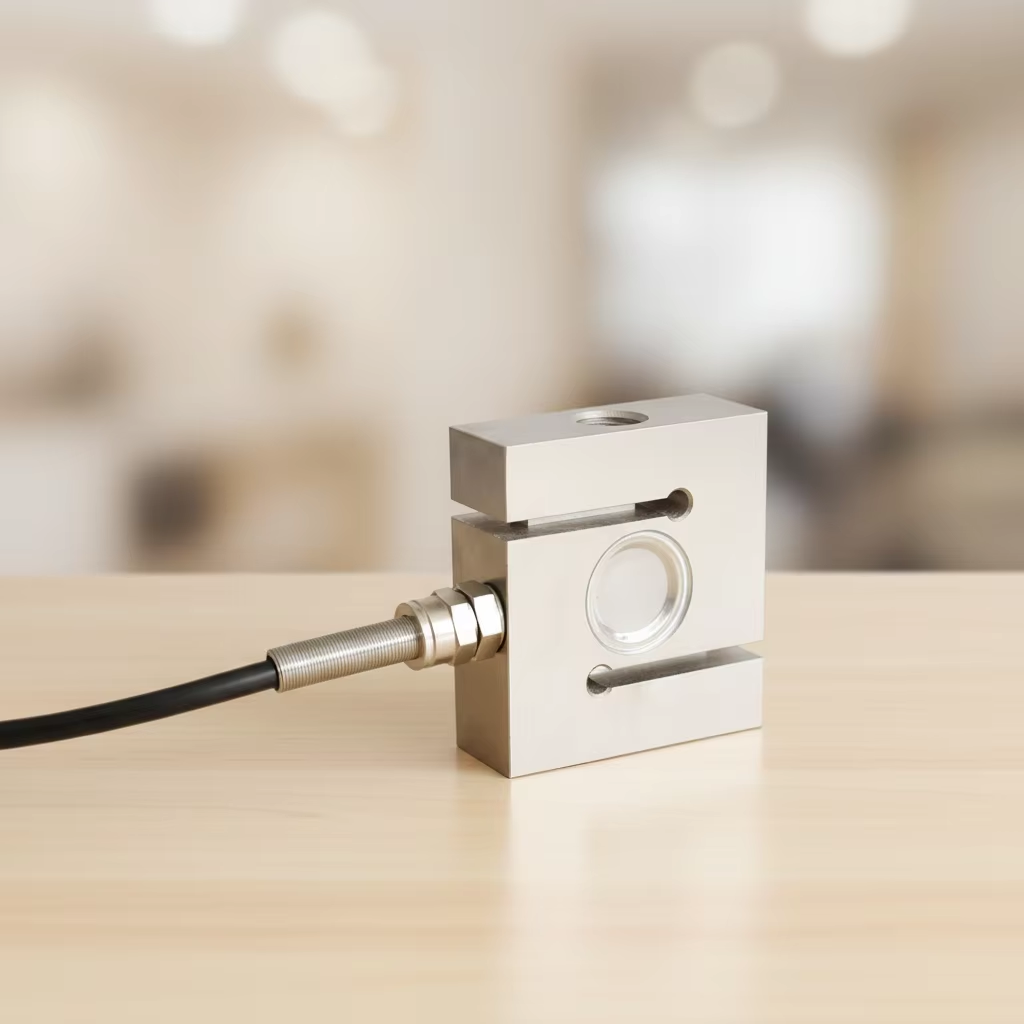
In the fast-paced, precision-driven world of mechanical manufacturing, where every component's weight and force can make or break a final product, reliable measurement tools are non-negotiable. Among these tools, S-type load cells stand out as versatile workhorses, quietly ensuring accuracy, safety, and efficiency across a wide range of applications. From monitoring tension in assembly lines to verifying component weights, these unassuming sensors play a critical role in maintaining the high standards that define modern mechanical manufacturing.
Understanding S-Type Load Cells: Basics and Working Principle
An S-type load cell, named for its distinctive S-shaped profile, is a force transducer that converts mechanical force—whether tension or compression—into a measurable electrical signal . At its core lies a strain gauge, a device that changes its electrical resistance when deformed by an applied force . When a load is applied to the S-shaped body of the sensor, the strain gauges attached to it stretch or compress, altering their resistance. This change is then converted into a proportional electrical output, which can be read and analyzed by monitoring systems .
What sets S-type load cells apart is their ability to measure both tension and compression forces with equal precision. This dual functionality makes them ideal for a wide array of manufacturing scenarios where forces can act in multiple directions . Constructed from durable materials like stainless steel or high-strength alloy steel, they offer excellent corrosion resistance and can withstand the harsh conditions often found in manufacturing environments, including dust, moisture, and temperature fluctuations . Many models also boast an IP67 ingress protection rating, ensuring they remain operational even in wet or dirty settings .

Key Applications in Mechanical Manufacturing
1. Assembly Line Tension Monitoring
In mechanical manufacturing, assembly lines often rely on conveyor belts, cables, and chains to move components and materials. Maintaining the correct tension in these systems is crucial for preventing jams, ensuring smooth operation, and extending the lifespan of equipment. S-type load cells are commonly used to monitor tension in these applications. By installing the load cells at key points in the system, manufacturers can continuously measure the force exerted on belts or cables. If the tension deviates from the optimal range, the monitoring system can trigger alerts or automatically adjust the tension, minimizing downtime and reducing the risk of equipment failure .
2. Component Weight Verification
Ensuring that each component meets precise weight specifications is essential for maintaining product quality and performance. Whether it's a small mechanical part or a large assembly, even minor weight discrepancies can lead to functional issues or safety hazards. S-type load cells are integrated into weighing stations along assembly lines to verify the weight of components as they are produced. These sensors can quickly and accurately measure the weight of parts, rejecting any that fall outside the acceptable tolerance range. This real-time quality control helps manufacturers catch defects early, reducing waste and ensuring that only compliant components move forward in the production process .
3. Material Testing and Quality Assurance
Before new materials or components are used in production, they must undergo rigorous testing to ensure they can withstand the forces and stresses they will encounter in real-world applications. S-type load cells are a staple in material testing laboratories, where they are used in universal testing machines to measure tension, compression, and bending forces. By subjecting materials to controlled loads and measuring their deformation, engineers can determine their mechanical properties, such as tensile strength, yield strength, and elasticity. This data is critical for selecting the right materials for specific applications and ensuring that products meet industry standards and safety regulations .
4. Robotic Arm Force Control
As automation continues to revolutionize mechanical manufacturing, robotic arms are becoming increasingly common in tasks such as welding, painting, and material handling. These robots must exert precise amounts of force to perform their tasks effectively without damaging components or equipment. S-type load cells are integrated into robotic arm end-effectors to provide real-time feedback on the force being applied. This feedback allows the robot's control system to adjust its movements and force output dynamically, ensuring that tasks are performed with the required accuracy. For example, in a robotic assembly process, the load cell can detect if a component is being pressed too hard or not hard enough, allowing the robot to make immediate corrections .
5. Hopper and Tank Weighing
Many manufacturing processes involve the use of hoppers and tanks to store and dispense raw materials, such as powders, liquids, or granules. Accurately measuring the amount of material in these containers is essential for maintaining consistent production quality and preventing overfilling or underfilling. S-type load cells are often used to convert these containers into weighing systems. By suspending the hopper or tank from the load cells, manufacturers can continuously monitor the weight of the material inside. This information can be used to control the flow of materials into the production process, ensuring that the correct amount of each ingredient is used every time .
Benefits of S-Type Load Cells in Manufacturing
1. High Precision and Accuracy
In mechanical manufacturing, even the smallest measurement error can have significant consequences. S-type load cells offer exceptional precision, with many models providing accuracies within 0.03% to 0.25% of full scale . This level of accuracy ensures that measurements are reliable and consistent, allowing manufacturers to maintain tight quality control standards.
2. Versatility
As highlighted by their wide range of applications, S-type load cells are incredibly versatile. Their ability to measure both tension and compression forces, combined with their compact size and durable construction, makes them suitable for use in almost any manufacturing environment. Whether it's a small-scale component testing lab or a large-scale production facility, there's an S-type load cell that can meet the specific needs of the application .
3. Durability and Longevity
Manufacturing environments can be tough on equipment, with exposure to dust, moisture, vibration, and extreme temperatures. S-type load cells are designed to withstand these harsh conditions, with many models featuring robust construction and protective coatings. This durability ensures that they can operate reliably for extended periods, reducing the need for frequent replacements and minimizing downtime .
4. Easy Integration and Installation
S-type load cells are relatively easy to install and integrate into existing manufacturing systems. They can be mounted in a variety of ways, including through threaded connections or mounting hardware, and are compatible with a wide range of monitoring and control systems. This ease of integration means that manufacturers can quickly upgrade their processes with these sensors without significant disruptions .
Choosing the Right S-Type Load Cell for Your Manufacturing Needs
When selecting an S-type load cell for a manufacturing application, several factors should be considered:
Capacity: Determine the maximum force or weight that the load cell will need to measure. Load cells are available in a wide range of capacities, from a few kilograms to several tons .
Accuracy Requirements: Consider the level of precision needed for the application. High-precision applications, such as material testing, may require load cells with tighter accuracy tolerances .
Environmental Conditions: Evaluate the operating environment, including factors like temperature, humidity, dust, and exposure to chemicals. Choose a load cell with an appropriate ingress protection rating and material construction to ensure reliable operation .
Calibration and Maintenance: Look for load cells that are easy to calibrate and maintain.
Conclusion
In the intricate world of mechanical manufacturing, where precision and efficiency are paramount, S-type load cells are indispensable tools. Their ability to accurately measure tension and compression forces, combined with their durability, versatility, and ease of integration, makes them ideal for a wide range of applications, from assembly line monitoring to material testing. By investing in high-quality S-type load cells and integrating them into their processes, manufacturers can improve product quality, increase operational efficiency, and ensure the safety and reliability of their products. As technology continues to advance, these sensors will undoubtedly play an even more critical role in shaping the future of mechanical manufacturing.