 EN
EN

1. Introduction
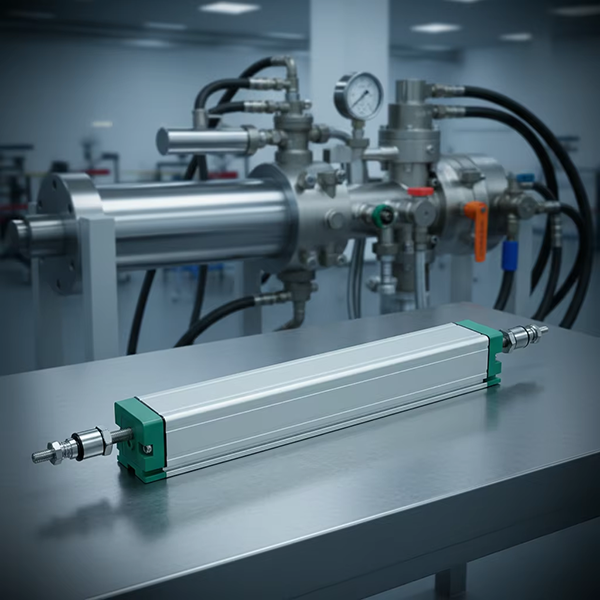
Linear displacement sensors, also referred to as linear position sensors, are critical components in modern industrial automation, precision measurement systems, and aerospace engineering. These devices convert mechanical linear motion into measurable electrical signals, serving as a vital bridge between the physical and digital worlds. With the rapid advancement of manufacturing technology and the growing demand for high-precision control, linear displacement sensors have evolved into a diverse family of products, each tailored to specific application scenarios.
2. Fundamental Working Principles
The core function of all linear displacement sensors is to translate linear position changes into electrical signals, but the underlying mechanisms vary significantly across different types.
Potentiometric sensors operate on the principle of resistance division. A movable brush connected to the measured object slides along a resistive element, changing the output voltage proportionally to the displacement. This simple design provides large signal output but suffers from mechanical wear over time.
Inductive sensors, including Linear Variable Differential Transformers (LVDTs), utilize electromagnetic induction. LVDTs feature a primary coil and two symmetric secondary coils; the movement of a ferromagnetic core alters the magnetic coupling between coils, producing a differential voltage output proportional to displacement. Non-contact inductive sensors detect metal targets through eddy current effects, where the presence of a conductive object changes the sensor's oscillation amplitude.
Capacitive sensors measure changes in capacitance caused by the displacement of a conductive target relative to fixed electrodes. This principle enables high sensitivity and resolution, making them suitable for micro-displacement measurements despite vulnerability to environmental factors like humidity^^1^^.
Magnetostrictive sensors employ the Wiedemann effect, where a magnetic field pulse travels along a waveguide and interacts with a movable magnet, generating a torsional wave whose travel time corresponds to the displacement position. This technology offers absolute position measurement with excellent long-term stability.
3. Industrial Applications and Selection Criteria
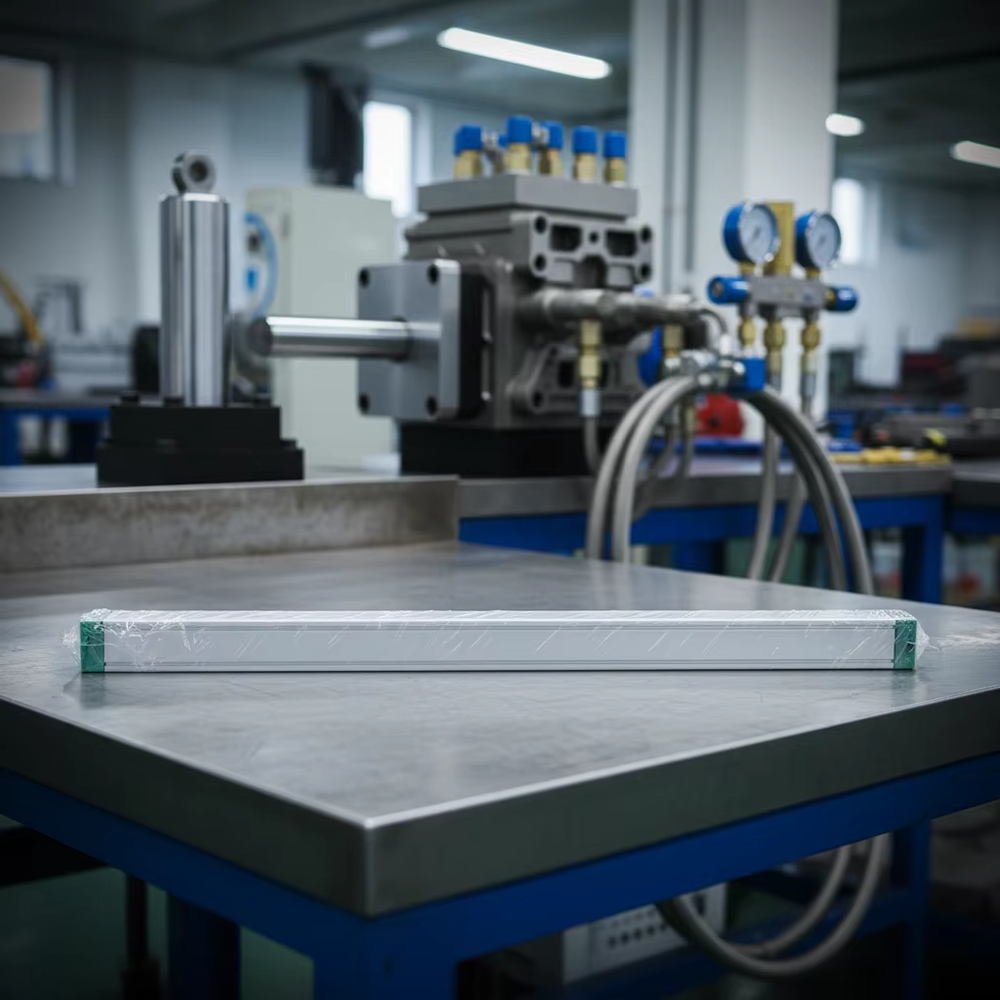
Linear displacement sensors find applications across diverse industries:
Automotive Manufacturing: Used in robotic welding arms and assembly line positioning systems to ensure precise component alignment.
Aerospace: Critical for flight control surfaces and landing gear position feedback, requiring extreme reliability under extreme conditions.
Medical Equipment: Enable precise positioning in surgical robots and diagnostic imaging devices, where accuracy directly impacts patient safety.
Oil and Gas: Monitor valve positions and pipeline deformations in harsh, high-pressure environments^^7^^.
When selecting a sensor, key considerations include:
Measurement range and required accuracy
Environmental conditions (temperature, humidity, contamination)
Response speed and dynamic performance
Output signal compatibility with control systems
Installation constraints and mechanical interface requirements.
4. Technological Advancements and Future Trends
Recent innovations focus on enhancing sensor intelligence and connectivity. Modern sensors integrate digital signal processing (DSP) for real-time error compensation and self-diagnostic capabilities. The emergence of Industry 4.0 has driven demand for sensors with Ethernet/IP and PROFINET connectivity, enabling seamless integration with industrial IoT systems.
Miniaturization remains a key trend, with micro-sensors as small as 5mm diameter developed for confined spaces in medical devices and robotics. Material science advancements have also produced sensors capable of operating in temperatures exceeding 200°C and pressures up to 400MPa, expanding their use in extreme environments.
5. Conclusion
Linear displacement sensors are indispensable components in modern industrial systems, enabling precise control and monitoring of mechanical motion. From simple potentiometers to advanced magnetostrictive devices, the diverse range of sensor types provides solutions for every application requirement. As technology continues to advance, these sensors will play an increasingly vital role in driving automation, improving manufacturing efficiency, and enabling new possibilities in precision engineering.