 EN
EN

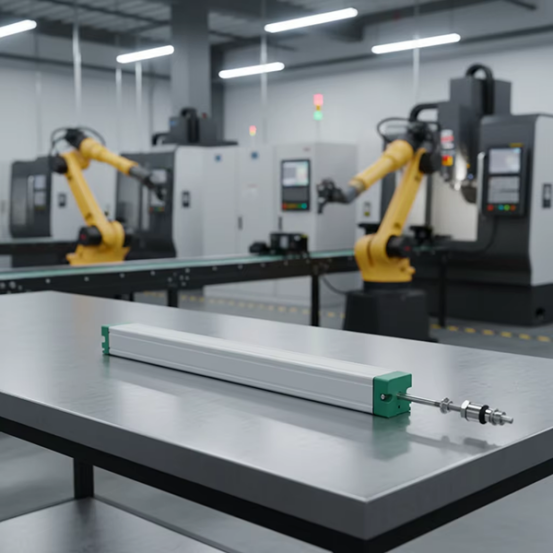
Position feedback represents the backbone of modern automation systems, enabling precise control and monitoring of mechanical movements across industrial applications. When automation equipment requires accurate real-time positioning data, traditional feedback methods often fall short of delivering the precision and reliability demanded by today's manufacturing processes. A linear transducer addresses these challenges by providing continuous, high-resolution position measurements that transform how automated systems achieve precise control and operational efficiency.
The integration of a linear transducer into automation systems fundamentally changes the approach to position sensing by converting mechanical displacement into precise electrical signals. This transformation enables control systems to make real-time adjustments based on accurate position data, resulting in improved product quality, reduced waste, and enhanced operational reliability. Understanding how these devices function and their specific mechanisms for improving position feedback reveals why modern automation increasingly depends on linear transducer technology for critical positioning applications.
Fundamental Operation Mechanisms of Linear Transducers
Signal Conversion Principles
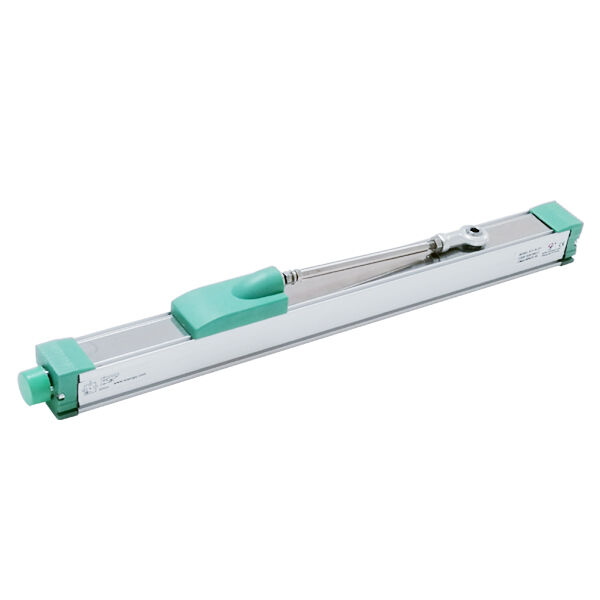
A linear transducer operates by converting mechanical displacement into electrical signals through various sensing technologies, with potentiometric, magnetostrictive, and LVDT principles being the most common approaches. The potentiometric linear transducer uses a resistive element with a sliding contact that changes resistance proportionally to position, creating a voltage output that directly corresponds to mechanical displacement. This direct relationship between position and electrical signal provides automation systems with immediate feedback that can be processed and acted upon without complex signal interpretation.
The conversion mechanism ensures that every millimeter of movement translates to a measurable change in output voltage or current, allowing control systems to detect even minute positional variations. This sensitivity becomes crucial in applications where precision positioning determines product quality or operational safety. The linear transducer maintains this conversion accuracy across its entire measurement range, providing consistent feedback regardless of whether the monitored component is at the beginning, middle, or end of its travel path.
Signal conditioning within the linear transducer ensures that the raw position data is processed into a format compatible with automation control systems, typically 4-20mA current loops or 0-10V voltage outputs. This standardization allows seamless integration with programmable logic controllers, human-machine interfaces, and distributed control systems without requiring specialized interface hardware.
Real-Time Data Transmission
The ability of a linear transducer to provide continuous position feedback creates a real-time communication channel between mechanical components and control systems. Unlike discrete position sensors that only provide information at specific points, linear transducers deliver uninterrupted position data throughout the entire range of motion, enabling control systems to track movement patterns, detect positional drift, and identify potential mechanical issues before they cause system failures.
This continuous data stream allows automation systems to implement sophisticated control algorithms that respond to position changes within milliseconds, enabling precise positioning control that maintains accuracy even under varying load conditions or external disturbances. The linear transducer facilitates closed-loop control systems where position feedback directly influences actuator commands, creating self-correcting systems that automatically compensate for positional errors.
The real-time nature of position feedback from a linear transducer enables predictive maintenance strategies where gradual changes in positioning behavior can indicate wearing components, misalignment, or other mechanical issues that require attention. This early warning capability helps prevent unexpected downtime and allows maintenance to be scheduled during planned production breaks rather than emergency shutdowns.
Precision Enhancement Through Linear Transducer Integration
Accuracy Improvements in Positioning Control
The implementation of a linear transducer in automation systems dramatically improves positioning accuracy by providing feedback resolution that often exceeds the mechanical precision of the controlled equipment. High-quality linear transducers can achieve position resolution of 0.01mm or better, enabling control systems to detect and correct positioning errors that would be imperceptible to other sensing methods. This enhanced accuracy translates directly to improved product quality in manufacturing applications where precise positioning determines dimensional tolerances.
Position accuracy benefits extend beyond simple dimensional control to encompass complex motion profiles where acceleration, deceleration, and velocity must be precisely controlled to achieve optimal results. The linear transducer provides the position feedback necessary for sophisticated motion control algorithms that optimize movement patterns for speed, accuracy, and energy efficiency. These improvements become particularly significant in high-speed automation applications where traditional positioning methods cannot provide sufficient feedback resolution.
The accuracy enhancement provided by a linear transducer enables implementation of advanced positioning strategies such as backlash compensation, thermal drift correction, and load-dependent position adjustment. These capabilities allow automation systems to maintain positioning accuracy under conditions that would cause significant errors with less sophisticated feedback methods.
Repeatability Enhancements
Repeatability represents a critical performance metric in automation systems, and the integration of a linear transducer significantly improves the ability to achieve consistent positioning results across multiple operational cycles. The continuous feedback provided by these devices enables control systems to learn from previous positioning operations and refine subsequent movements to achieve increasingly precise results. This self-improving capability becomes essential in applications where slight variations in positioning can affect product quality or process efficiency.
The linear transducer enables detection of positioning variations that occur due to temperature changes, mechanical wear, or load variations, allowing control systems to implement compensation strategies that maintain consistent positioning performance over time. This capability proves particularly valuable in long-running automation processes where environmental conditions may change throughout the production cycle, requiring ongoing position adjustments to maintain optimal performance.
Enhanced repeatability through linear transducer feedback allows automation systems to operate with tighter positioning tolerances, enabling production of higher-quality products while reducing material waste and rework. The ability to achieve consistent positioning results also supports statistical process control initiatives where position data contributes to overall quality metrics and continuous improvement efforts.
Integration Advantages in Automated Systems
Control System Communication
Modern automation systems require seamless communication between sensors and control elements, and the linear transducer excels in providing standardized output signals that integrate effortlessly with existing control infrastructure. The analog and digital communication capabilities of contemporary linear transducers ensure compatibility with both legacy control systems and modern networked automation architectures. This flexibility allows facilities to upgrade their position sensing capabilities without requiring comprehensive control system replacement.
The communication interface of a linear transducer typically includes features such as signal scaling, offset adjustment, and fault detection reporting that enhance the value of position feedback beyond simple displacement measurement. These advanced communication features enable control systems to diagnose sensor health, calibrate position readings, and adjust measurement parameters without physical access to the device. Such capabilities prove essential in applications where sensors are installed in locations that are difficult or dangerous to access during normal operations.
Integration advantages extend to data logging and analysis capabilities where the continuous position data from a linear transducer can be recorded and analyzed to identify operational patterns, optimize performance parameters, and predict maintenance requirements. This data-rich environment supports advanced analytics and machine learning applications that can further enhance automation system performance.
Maintenance and Diagnostic Benefits
The diagnostic capabilities inherent in linear transducer technology provide automation systems with early warning indicators of potential mechanical issues before they result in equipment failure or product quality problems. By monitoring position feedback patterns, control systems can identify gradual changes in mechanical behavior that indicate wearing components, misalignment, or other developing issues that require maintenance attention. This predictive maintenance capability reduces unplanned downtime and allows maintenance activities to be scheduled during convenient production breaks.
The robust construction and sealed design typical of industrial linear transducers contribute to reduced maintenance requirements compared to alternative position sensing methods. These devices typically operate reliably in harsh industrial environments with minimal maintenance intervention, reducing the total cost of ownership for automation systems. When maintenance is required, the diagnostic feedback from the linear transducer often provides specific information about the nature and location of issues, reducing troubleshooting time and improving maintenance efficiency.
System-level diagnostic benefits include the ability to correlate position feedback data with other system parameters such as load conditions, operating temperatures, and production rates. This comprehensive diagnostic approach enables identification of root causes for positioning issues and supports data-driven maintenance decisions that optimize equipment reliability and performance.
Application-Specific Performance Improvements
Manufacturing Process Optimization
In manufacturing applications, the precise position feedback provided by a linear transducer enables optimization of process parameters that directly impact product quality and production efficiency. Assembly operations benefit from accurate positioning that ensures consistent component alignment, reducing assembly errors and improving product reliability. The real-time feedback allows automated assembly systems to adjust positioning based on component variations, maintaining assembly quality despite normal manufacturing tolerances in individual parts.
Material handling applications utilize linear transducer feedback to optimize conveyor speeds, positioning accuracy, and transfer operations that affect overall production throughput. The precise position control enables smooth material flow, reduces product damage from mishandling, and supports just-in-time manufacturing strategies where timing and positioning accuracy are critical for maintaining production schedules. These improvements contribute to reduced operating costs and improved customer satisfaction through consistent product quality.
Process control applications in industries such as chemical processing, food production, and pharmaceutical manufacturing benefit from the accurate valve and actuator positioning enabled by linear transducer feedback. Precise control of flow rates, mixing ratios, and processing parameters directly impacts product quality and regulatory compliance, making the accuracy improvements provided by these devices essential for maintaining production standards.
Quality Control and Inspection Systems
Automated quality control systems rely heavily on precise positioning to ensure accurate measurements and inspections, and the integration of a linear transducer significantly improves the reliability and accuracy of these critical operations. Dimensional measurement systems use position feedback to control probe movement and ensure consistent measurement conditions, improving measurement repeatability and reducing measurement uncertainty. This enhanced capability enables detection of smaller quality deviations and supports tighter quality control specifications.
Vision inspection systems benefit from precise positioning control that ensures consistent part presentation and camera positioning, improving image quality and measurement accuracy. The linear transducer enables fine-tuning of positioning parameters to optimize lighting conditions, focus settings, and measurement angles, resulting in more reliable inspection results and reduced false rejection rates. These improvements contribute to overall equipment effectiveness and reduce costs associated with incorrectly rejected good parts.
Coordinate measuring machine applications utilize linear transducer technology to achieve the precise probe positioning required for accurate dimensional measurements. The high resolution and accuracy of position feedback enable measurement of complex geometries with confidence levels that support critical quality decisions and regulatory compliance requirements. This capability becomes essential in industries where dimensional accuracy directly impacts product safety and performance.
FAQ
How does a linear transducer compare to rotary encoders for position feedback?
A linear transducer provides direct linear position measurement without the need for mechanical conversion systems, while rotary encoders require gear trains or lead screws to convert rotational motion to linear displacement. This direct measurement approach eliminates cumulative errors from mechanical conversion components and provides more accurate position feedback for linear motion applications. Linear transducers also offer simpler installation and calibration procedures since they measure displacement directly rather than calculating it from rotational data.
What accuracy levels can be achieved with modern linear transducer technology?
Modern linear transducers can achieve position accuracy levels ranging from 0.25% to 0.01% of full scale, with high-end devices providing resolution of 0.001mm or better. The actual accuracy achieved depends on the specific technology used, environmental conditions, and proper installation procedures. Magnetostrictive and LVDT-based linear transducers typically provide the highest accuracy levels, while potentiometric devices offer good accuracy at lower cost points for applications with less demanding precision requirements.
Can linear transducers operate reliably in harsh industrial environments?
Industrial-grade linear transducers are designed to operate reliably in harsh environments with protection ratings up to IP67 or higher, enabling operation in conditions involving dust, moisture, vibration, and temperature extremes. Sealed construction protects internal components from contamination, while robust mechanical design withstands shock and vibration typical of industrial applications. Many linear transducers are rated for operating temperatures from -40°C to +125°C and can withstand significant mechanical stress without compromising measurement accuracy.
How do linear transducers contribute to predictive maintenance strategies?
Linear transducers support predictive maintenance by providing continuous position data that can reveal gradual changes in mechanical behavior indicative of component wear, misalignment, or other developing issues. By monitoring position feedback patterns over time, maintenance teams can identify trends that predict when components will require service, allowing maintenance to be scheduled during planned downtime rather than waiting for unexpected failures. The diagnostic information provided by position feedback helps focus maintenance efforts on specific components and reduces troubleshooting time when issues occur.
Table of Contents
- Fundamental Operation Mechanisms of Linear Transducers
- Precision Enhancement Through Linear Transducer Integration
- Integration Advantages in Automated Systems
- Application-Specific Performance Improvements
-
FAQ
- How does a linear transducer compare to rotary encoders for position feedback?
- What accuracy levels can be achieved with modern linear transducer technology?
- Can linear transducers operate reliably in harsh industrial environments?
- How do linear transducers contribute to predictive maintenance strategies?