 EN
EN

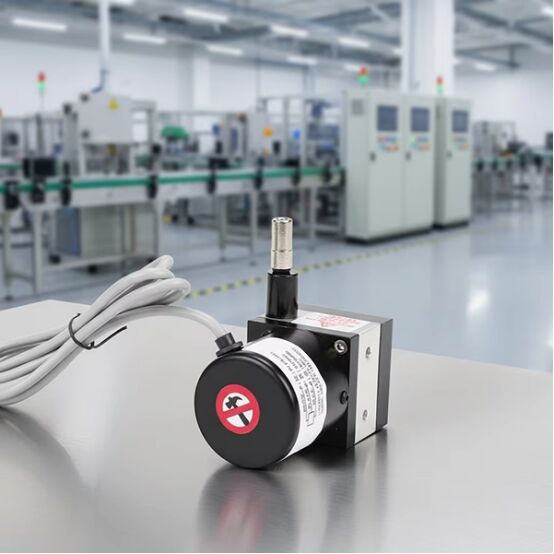
In precision measurement and industrial automation, achieving accurate displacement readings over extended ranges presents significant technical challenges. While various sensor technologies compete for attention in this space, one solution consistently demonstrates superior performance characteristics that make it the preferred choice for demanding long-range applications. Understanding why this particular sensing approach excels requires examining the fundamental physics, practical advantages, and real-world performance benefits that set it apart from alternative measurement methods.
The superiority of a draw wire sensor in long-range displacement measurement stems from its unique operational principle that maintains consistent accuracy regardless of measurement distance. Unlike technologies that suffer from signal degradation, environmental interference, or mechanical wear over extended ranges, this sensing method leverages proven mechanical encoding principles combined with robust construction materials. This combination delivers exceptional linearity, repeatability, and long-term stability that industrial applications demand when measuring displacements spanning several meters or more.
Fundamental Advantages of Draw Wire Technology for Extended Range Measurements
Superior Linearity Across the Entire Measurement Range
The primary reason why a draw wire sensor excels in long-range applications lies in its inherent linearity characteristics. Traditional sensing methods often exhibit non-linear response curves that become more pronounced over extended measurement distances, requiring complex compensation algorithms and frequent calibration procedures. In contrast, the mechanical principle underlying draw wire operation ensures that each increment of linear displacement translates to a proportional rotational movement of the internal measuring drum.
This direct mechanical relationship means that accuracy remains consistent whether measuring the first millimeter or the final meter of the sensor's range. The rotary encoder housed within the draw wire sensor converts this rotational motion into precise digital or analog output signals, maintaining the same resolution and accuracy characteristics throughout the entire measurement span. This eliminates the need for range-dependent calibration factors and ensures predictable performance across all operating conditions.
Minimal Environmental Sensitivity Over Distance
Long-range measurement applications frequently encounter varying environmental conditions along the measurement path, including temperature gradients, humidity changes, electromagnetic interference, and mechanical vibrations. Many sensor technologies suffer degraded performance when exposed to these environmental variations, particularly over extended distances where cumulative effects become significant. The draw wire sensor design inherently minimizes these environmental sensitivities through its enclosed mechanical construction.
The sensing element remains protected within a sealed housing, isolated from external environmental factors that could affect measurement accuracy. The wire cable itself, typically constructed from stainless steel or specialized alloy materials, exhibits minimal thermal expansion characteristics that would otherwise introduce measurement errors in temperature-varying environments. This environmental robustness becomes increasingly important in long-range applications where the measurement path may span different microclimates or operational zones within an industrial facility.
Exceptional Mechanical Durability for Extended Service Life
Long-range displacement measurement applications often involve continuous or frequent measurement cycles, subjecting the sensor to significant mechanical stress over its operational lifetime. The draw wire sensor design distributes mechanical loads evenly across its internal components, reducing wear patterns that could degrade measurement accuracy over time. The wire tensioning system maintains consistent cable tension throughout the measurement range, preventing slack conditions that could introduce measurement errors or mechanical damage.
The internal measuring drum and encoder assembly utilize precision bearings and wear-resistant materials specifically selected for extended operational cycles. This mechanical robustness translates to lower maintenance requirements and reduced total cost of ownership for long-range measurement systems, making the draw wire sensor particularly attractive for applications where sensor replacement or recalibration would be costly or operationally disruptive.
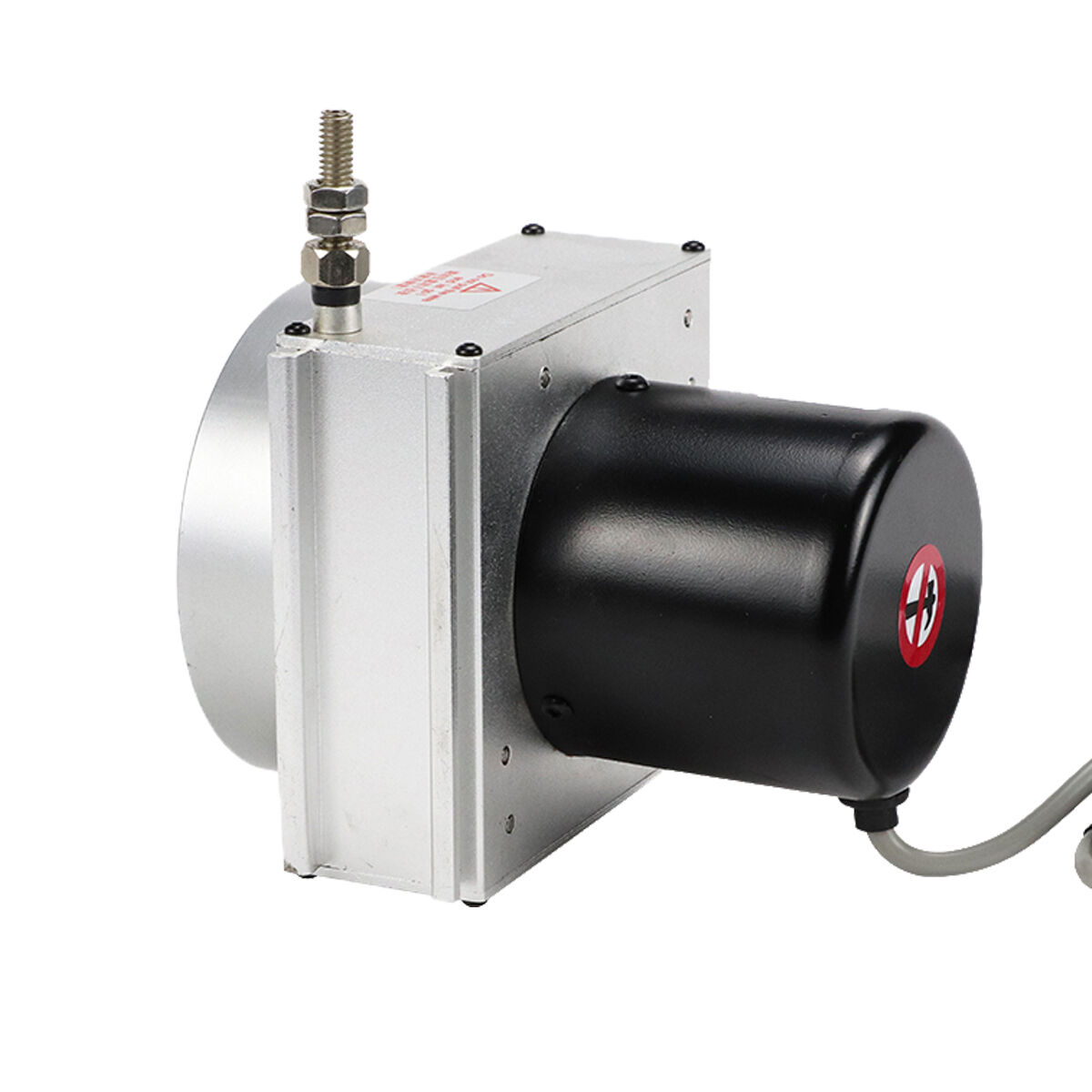
Technical Performance Characteristics That Enable Long-Range Excellence
High Resolution Capabilities Maintained Over Distance
Achieving meaningful measurement resolution over long ranges requires sensor technology that can discriminate small displacement changes even when the total measurement span reaches several meters. The draw wire sensor accomplishes this through its mechanical advantage system, where small linear displacements produce amplified rotational movements at the encoding element. This mechanical amplification enables high-resolution encoders to detect minute displacement changes with excellent signal-to-noise ratios.
Modern draw wire sensor implementations commonly achieve resolution specifications of 0.01mm or better across measurement ranges extending to 10 meters or more. This combination of high resolution and extended range represents a significant advantage over alternative technologies that must compromise between these competing requirements. The consistent resolution performance across the entire measurement range eliminates dead zones or reduced accuracy regions that could compromise system performance in critical applications.
Dynamic Response Characteristics Optimized for Range
Long-range displacement measurements often involve monitoring dynamic processes where both position accuracy and response speed are critical performance parameters. The draw wire sensor design balances these requirements through careful optimization of the mechanical system dynamics. The wire tensioning mechanism provides sufficient restoring force to ensure rapid response to position changes while maintaining smooth operation that prevents measurement artifacts or oscillations.
The rotary encoder system within the draw wire sensor can accommodate high-frequency sampling rates, enabling real-time monitoring of rapid displacement changes even over extended measurement ranges. This dynamic capability proves essential in applications such as crane positioning systems, large-scale manufacturing equipment, or structural monitoring where both position accuracy and response speed directly impact operational safety and efficiency.
Application-Specific Benefits for Long-Range Displacement Scenarios
Industrial Automation and Manufacturing Integration
Modern manufacturing facilities increasingly require precise position feedback over extended ranges to optimize production processes and ensure consistent product quality. Draw wire sensor technology integrates seamlessly with standard industrial automation protocols, providing real-time displacement data that can be incorporated into closed-loop control systems. The sensor's ability to maintain accuracy over long ranges enables single-sensor solutions where alternative technologies might require multiple sensors or complex calibration procedures.
The robust electrical output characteristics of draw wire sensors support direct interface with programmable logic controllers, motion controllers, and data acquisition systems without requiring signal conditioning or amplification equipment. This integration simplicity reduces system complexity and potential failure points while ensuring reliable long-term operation in demanding industrial environments.
Infrastructure and Structural Monitoring Applications
Civil engineering and infrastructure monitoring applications present unique challenges for displacement measurement systems, often requiring continuous monitoring over measurement ranges that extend beyond typical industrial sensor capabilities. Draw wire sensor technology addresses these requirements through specialized long-range configurations that can accommodate measurement distances of 50 meters or more while maintaining sub-millimeter accuracy specifications.
The weatherproof construction options available for draw wire sensors enable outdoor installation in structural monitoring applications such as bridge deflection measurement, building settlement monitoring, or dam deformation tracking. The sensor's ability to provide continuous displacement data over extended periods without drift or calibration requirements makes it ideal for long-term monitoring programs where sensor reliability directly impacts public safety.
Comparative Analysis Against Alternative Long-Range Sensing Technologies
Advantages Over Laser and Optical Systems
Laser interferometry and optical displacement measurement systems can achieve exceptional accuracy over long ranges but suffer from significant limitations that make draw wire sensor technology preferable for many practical applications. Optical systems require clear line-of-sight conditions and are susceptible to interference from dust, humidity, vibration, and atmospheric disturbances that commonly occur in industrial environments.
The draw wire sensor operates independently of ambient lighting conditions and atmospheric clarity, providing consistent performance in environments where optical systems would fail or require extensive environmental controls. Additionally, the mechanical connection inherent in draw wire operation ensures that measurement accuracy cannot be compromised by optical alignment issues or beam interruption, factors that can cause catastrophic measurement errors in laser-based systems.
Benefits Compared to Linear Variable Differential Transformers
Linear Variable Differential Transformer technology offers excellent accuracy for short to medium-range displacement measurements but becomes impractical for long-range applications due to physical size and cost constraints. Achieving meter-scale measurement ranges with LVDT technology requires proportionally large sensor assemblies that become unwieldy and expensive for most practical applications.
The draw wire sensor achieves equivalent or superior accuracy specifications in a compact housing that remains constant regardless of measurement range. This size advantage enables flexible installation options and reduces the mechanical integration challenges associated with accommodating large sensor assemblies in equipment designs. The cost scaling characteristics of draw wire sensors also favor long-range applications, where the per-meter cost advantage becomes increasingly significant.
Implementation Considerations for Long-Range Draw Wire Applications
Installation and Mounting Requirements
Successful implementation of draw wire sensors in long-range applications requires careful attention to mounting arrangements and wire routing considerations. The sensor housing must be positioned to provide adequate clearance for the wire extension mechanism while ensuring that the measurement path remains free from obstructions that could damage the wire or introduce measurement errors.
Proper wire tensioning during installation ensures optimal measurement accuracy and prevents premature wear of internal components. The installation process should account for thermal expansion effects in the mounting structure and measurement target, particularly in applications where temperature variations could affect the apparent displacement readings. Professional installation guidelines specific to each application ensure that the draw wire sensor delivers its full performance potential over the intended operational lifetime.
Calibration and Maintenance Protocols
The inherent stability of draw wire sensor technology minimizes ongoing calibration requirements compared to alternative measurement systems. Initial factory calibration typically remains valid throughout the sensor's operational life, eliminating the need for periodic recalibration procedures that could disrupt system operation or require specialized test equipment.
Maintenance requirements for draw wire sensors focus primarily on periodic inspection of the wire cable for signs of wear or damage and verification of proper tension levels. The sealed housing design protects internal components from contamination, while the robust mechanical construction ensures reliable operation even under demanding environmental conditions. This low-maintenance characteristic reduces total cost of ownership and operational complexity for long-range measurement systems.
FAQ
What measurement range capabilities can draw wire sensors achieve for long-distance applications?
Draw wire sensors are available in configurations that support measurement ranges from several meters up to 50 meters or more, depending on the specific application requirements. Standard industrial models commonly offer ranges of 5-15 meters with resolution specifications of 0.01mm or better, while specialized long-range configurations can extend measurement capabilities significantly further while maintaining sub-millimeter accuracy specifications.
How do environmental conditions affect the accuracy of draw wire sensors in long-range measurements?
Draw wire sensors demonstrate exceptional environmental stability due to their enclosed mechanical design and temperature-compensated construction materials. The sealed housing protects internal components from dust, moisture, and contamination, while the wire cable materials exhibit minimal thermal expansion characteristics. This environmental robustness ensures consistent measurement accuracy across wide temperature ranges and challenging industrial environments.
Can draw wire sensors provide real-time data for dynamic long-range displacement monitoring?
Modern draw wire sensors support high-frequency sampling rates enabling real-time monitoring of dynamic displacement changes over extended measurement ranges. The mechanical response characteristics are optimized to provide rapid position tracking while maintaining measurement stability, making them suitable for applications requiring both position accuracy and fast response times such as crane positioning or large machinery monitoring.
What advantages do draw wire sensors offer compared to laser measurement systems for long-range applications?
Draw wire sensors provide several critical advantages over laser systems including immunity to atmospheric conditions, dust, humidity, and vibration that can compromise optical measurements. They operate reliably without requiring clear line-of-sight conditions and are not susceptible to beam interruption or alignment issues. Additionally, the mechanical connection ensures measurement continuity and prevents the catastrophic measurement failures possible with optical systems.
Table of Contents
- Fundamental Advantages of Draw Wire Technology for Extended Range Measurements
- Technical Performance Characteristics That Enable Long-Range Excellence
- Application-Specific Benefits for Long-Range Displacement Scenarios
- Comparative Analysis Against Alternative Long-Range Sensing Technologies
- Implementation Considerations for Long-Range Draw Wire Applications
-
FAQ
- What measurement range capabilities can draw wire sensors achieve for long-distance applications?
- How do environmental conditions affect the accuracy of draw wire sensors in long-range measurements?
- Can draw wire sensors provide real-time data for dynamic long-range displacement monitoring?
- What advantages do draw wire sensors offer compared to laser measurement systems for long-range applications?