 EN
EN

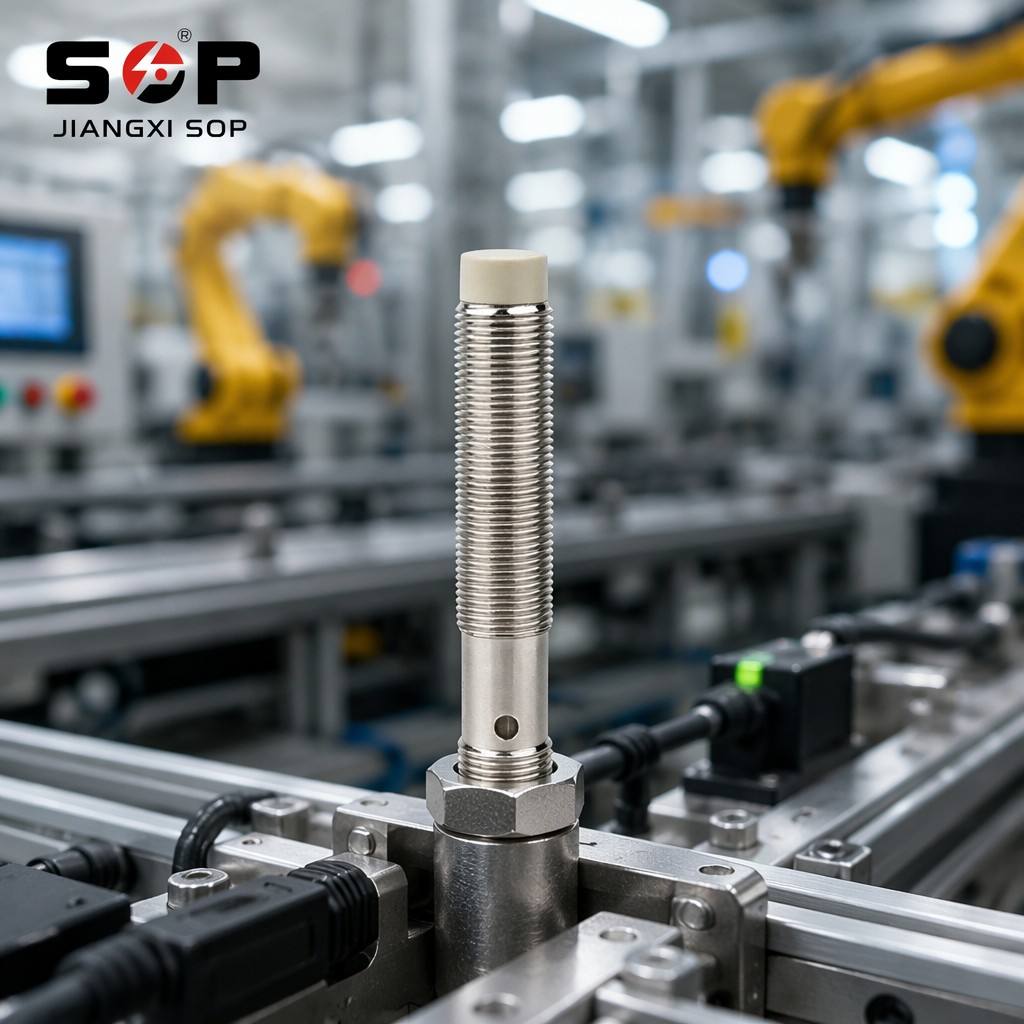
M12 Inductive Proximity Sensor: Core Advantages & Industrial Application Scenarios
As one of the most widely adopted industrial detection components, the M12 cylindrical inductive proximity sensor delivers reliable non-contact metal detection for automated production. It is divided into two types: flush mount and non-flush mount, to satisfy different installation and sensing distance demands. With compact size, stable performance and strong environmental adaptability, it has become a standard sensing solution for modern automation equipment.
The sensor boasts multiple prominent strengths. First, non-contact detection design eliminates mechanical friction and collision wear, greatly extending service life without damaging detected workpieces. The cylindrical M12 compact structure saves installation space, ideal for narrow equipment internal spaces. It supports DC10-30V wide voltage input, optional NPN/PNP, NO/NC output modes, compatible with mainstream PLC control systems. Equipped with IP67 waterproof and dustproof housing, it works steadily under oily, humid and dusty workshop conditions. The flush type enables embedded installation, while the non-flush version provides longer sensing distance, offering flexible choices for diverse engineering requirements. Besides, it features strong anti-electromagnetic interference capability, effectively avoiding signal drift in complex industrial electromagnetic environments.
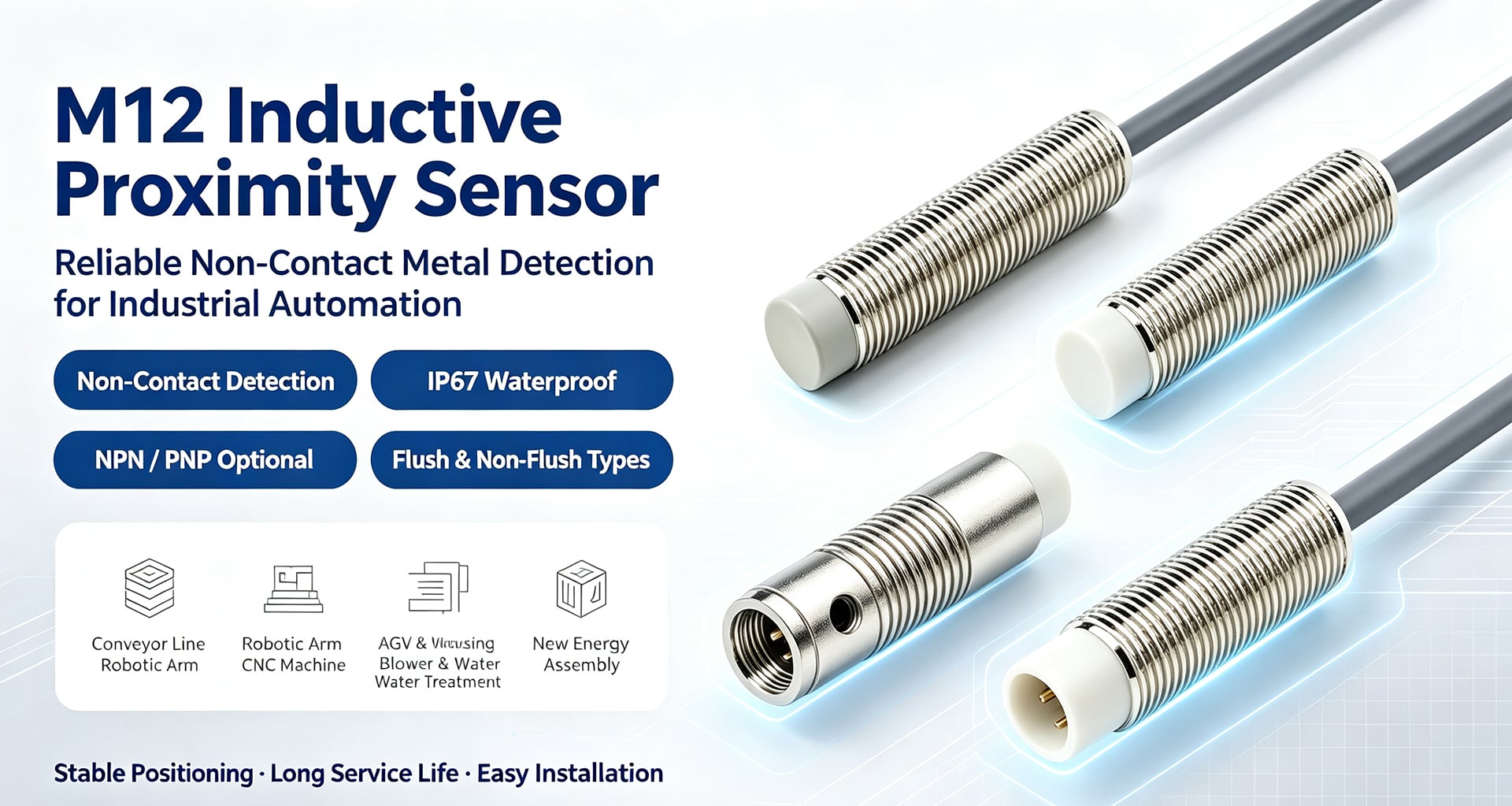
The M12 proximity sensor covers extensive industrial scenarios. In automated assembly lines, it realizes workpiece presence detection, production counting, cylinder and sliding table stroke limit positioning, and is widely deployed on robotic arm fixtures to confirm clamping status. For CNC machine tools and stamping equipment, it detects tool position and monitors rotational speed through gear discs to ensure machining safety.
In logistics and intelligent warehousing, it serves for AGV positioning, conveyor material inspection and stacker travel limit. It also fits packaging machinery, 3C electronics and lithium battery assembly lines for metal component identification. Meanwhile, it is commonly installed on blowers, water treatment devices and aquaculture aeration equipment for valve position feedback and motor speed monitoring. In engineering machinery and new energy production workshops, the sensor completes position feedback of hydraulic components and assembly station positioning.
Simple installation, stable signal and low maintenance cost make the M12 inductive proximity sensor an indispensable basic sensor for industrial automation. It helps enterprises realize automatic detection, improve production efficiency and reduce equipment failure risks.