 EN
EN

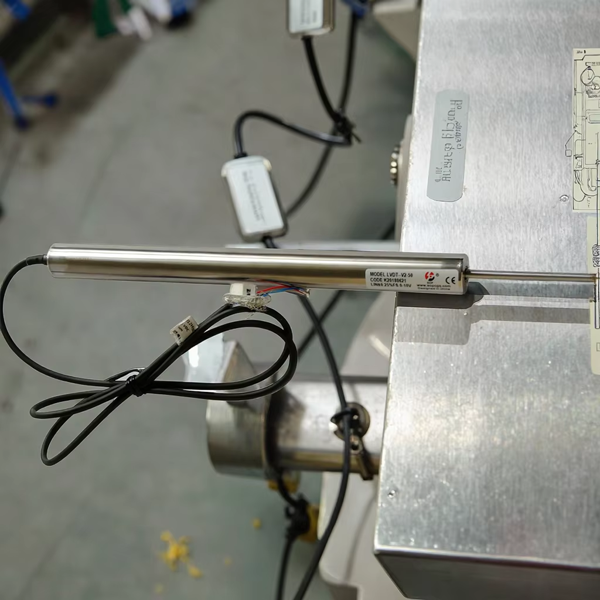
So, have you heard about Linear Variable Differential Transformers, or LVDT sensors? They’ve become pretty much essential in lots of industrial and engineering projects. Folks love them because they’re super accurate and reliable, especially when it comes to measuring linear movement. In this guide, I’ll break down the basics of how these sensors work and where they’re typically used.
Basically, an LVDT works through electromagnetic induction. Imagine a cylindrical core tucked inside a coil setup—there’s a primary coil and two secondary coils on either side, all arranged symmetrically. When an alternating current runs through that primary coil, it creates a magnetic field that induces voltage in the secondary coils. Now, as you move the core back and forth, it changes how the voltage gets transferred between the primary and secondary coils. The difference in voltage—that’s your key. It’s directly tied to how far the core has moved, which means you get a really precise measurement of displacement.
What’s pretty cool about LVDT sensors is their ability to deliver high resolution and consistent results. Basically, they can measure tiny movements with great accuracy, and they do so repeatedly without fuss. Plus, since the core doesn’t actually touch the coils, there’s no friction—meaning these things last longer and need less maintenance.
You’ll find LVDTs popping up all over the place. In aerospace, for example, they’re used to keep an eye on the structural health of aircraft—measuring how wings or fuselage might flex or shift. That’s super important for safety and meeting strict regulations. They’re also handy in civil engineering, helping monitor building or bridge movements, and in industrial automation, where precise control is a must.
Even in hydraulic and pneumatic systems, LVDT sensors do their thing. Take hydraulic jets—they ensure the control valves are perfectly positioned, keeping everything running smoothly. They’re tough enough for harsh environments, which makes them a good fit for oil and gas setups where high pressure and extreme temperatures are the norm.
All in all, the LVDT sensor is a real workhorse when it comes to precise measurement. Its knack for high accuracy in tough conditions makes it a go-to tool across many industries. And as technology keeps advancing, these sensors are just getting better—more precise, more reliable—and that’s why they’re still a core part of modern measurement systems.