 EN
EN

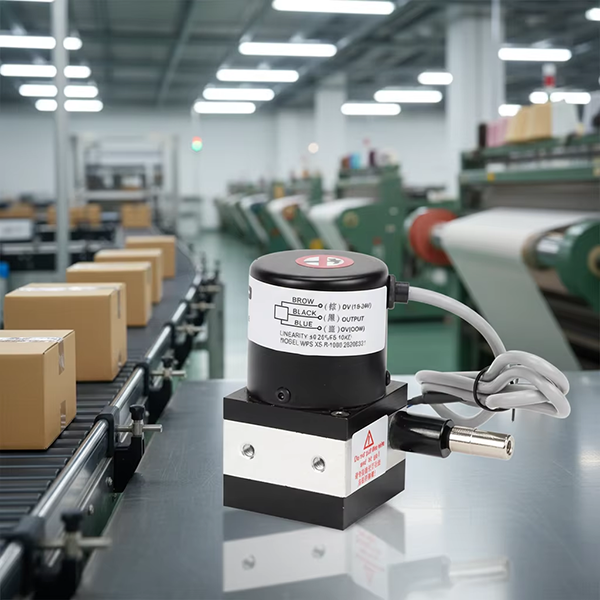
If you’re building or upgrading automated industrial equipment, you’ve probably spent hours debating laser trackers, high-end optical sensors, and fancy wireless monitoring systems. But have you considered the humble draw wire sensor? It’s easy to overlook this decades-old technology, but it’s still one of the most useful tools in the automation designer’s kit — and it solves a lot of problems that fancier options can’t, for a fraction of the cost.
Let me start with the biggest win: draw wire sensors handle long stroke measurements without breaking the bank. If you need to track linear motion over several meters — think hydraulic actuators on packaging lines, or scissor lifts in automated warehouses — you don’t need to splurge on a complex magnetic encoder system. A basic draw wire sensor does the job with consistent accuracy, and it fits in a tiny footprint compared to longer stroke alternatives.
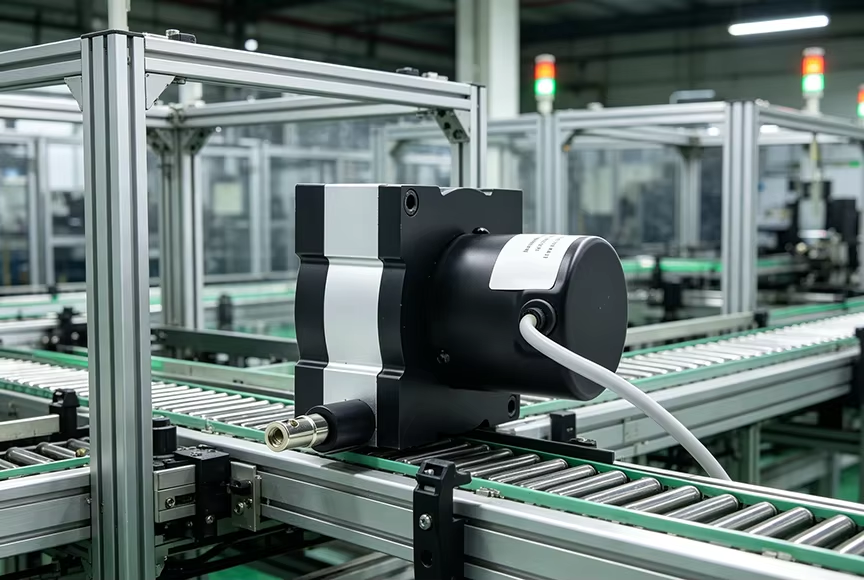
They’re also tough enough for messy industrial environments. Modern draw wire sensors come with IP65-rated housing, stainless steel cables, and shock-resistant components. They work reliably around cutting dust, welding fumes, and high humidity — conditions that would knock out more sensitive optical sensors. I’ve seen them run for 5+ years in heavy material handling equipment with zero maintenance.
What really surprises people is how easy they are to integrate. Most models offer standard incremental, absolute, or analog outputs that plug straight into your existing PLC, no special adapters or calibration software required. You can mount them in tight spaces, route the cable around obstacles with a simple pulley, and have them up and running in an hour.
Don’t get me wrong: draw wire sensors aren’t right for every application. They’re contact-based, so they won’t work for non-contact measurement needs. But for most linear position tracking in automated equipment, they deliver unbeatable value. Next time you’re designing a new system, give them a second look — you might just save thousands of dollars and a lot of downtime down the line.