 EN
EN

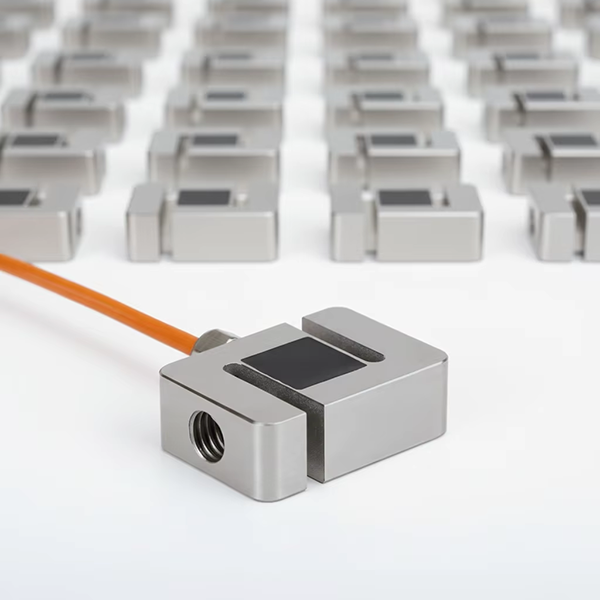
S-type load cells are widely used force measurement devices, favored for their compact structure, high accuracy, and strong adaptability to tensile and compressive forces. Selecting the right S-type load cell is crucial to ensuring measurement accuracy, stability, and service life in various industrial applications. This article focuses on the key selection criteria and typical application scenarios of S-type load cells.
When selecting an S-type load cell, several core factors must be considered. First, the measuring range is the primary factor: it should be 120% to 150% of the maximum force to be measured, avoiding overload damage while ensuring measurement sensitivity. Second, accuracy grade directly affects measurement results—for precision applications such as laboratory testing and high-precision weighing, grade 0.05 or higher is recommended; for general industrial control, grade 0.1 to 0.3 is sufficient. Third, environmental adaptability: choose corrosion-resistant materials (such as 316L stainless steel) for harsh environments with moisture, acid, or alkali; select high-temperature resistant models for high-temperature working conditions.
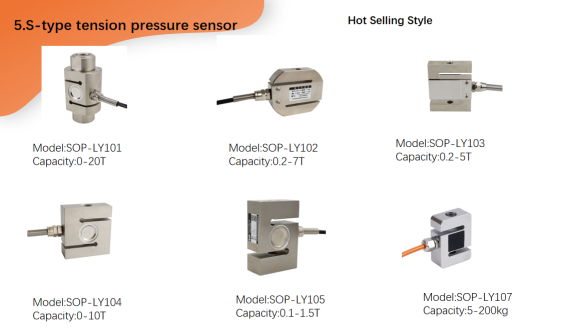
Other selection points include output signal type (4-20mA, 0-10V, or digital signals like RS485) matching the supporting instruments, and installation space—S-type load cells are small in size, suitable for narrow installation positions. Additionally, overload protection and IP protection level (IP65 or higher for outdoor or dusty environments) should be considered to ensure long-term stable operation.
S-type load cells have a wide range of applications across multiple industries. In the weighing industry, they are used in hopper scales, belt scales, and hanging scales, realizing accurate measurement of bulk materials and finished products. In the industrial automation field, they are applied to force control in assembly lines, such as tension control of packaging films and pressure detection in stamping processes.
In the construction and testing industries, they are used to measure tension and compression forces in structural components, ensuring project safety. In the food and pharmaceutical industries, stainless steel S-type load cells with high corrosion resistance and hygiene levels are used to meet strict hygiene standards. They also play an important role in aerospace, automotive testing, and other high-precision fields, providing reliable force data support.
In summary, selecting an S-type load cell requires comprehensive consideration of measuring range, accuracy, environment, and application requirements. Its versatile structure and reliable performance make it an indispensable force measurement component in modern industrial production and scientific research.
The Function and Advantages of S-Type Load Cells
S-type load cells are essential force and weight measurement devices widely used in industrial and scientific fields. Their core function is to convert tensile or compressive forces into measurable electrical signals, which can be further processed by supporting instruments to achieve accurate weight or force monitoring, control, and data analysis. They play a key role in ensuring measurement accuracy and operational stability in various scenarios, from industrial production to laboratory testing.
Compared with other types of load cells, S-type ones have obvious advantages. Firstly, their compact S-shaped structure enables easy installation even in narrow spaces. Secondly, they excel in both tension and compression measurement with high accuracy and good repeatability. Additionally, most models are made of corrosion-resistant materials like 316L stainless steel, adapting to harsh environments. Their stable output signals (such as 4-20mA) and strong anti-interference ability also make them reliable, serving as an indispensable component for efficient and precise measurement.