 EN
EN

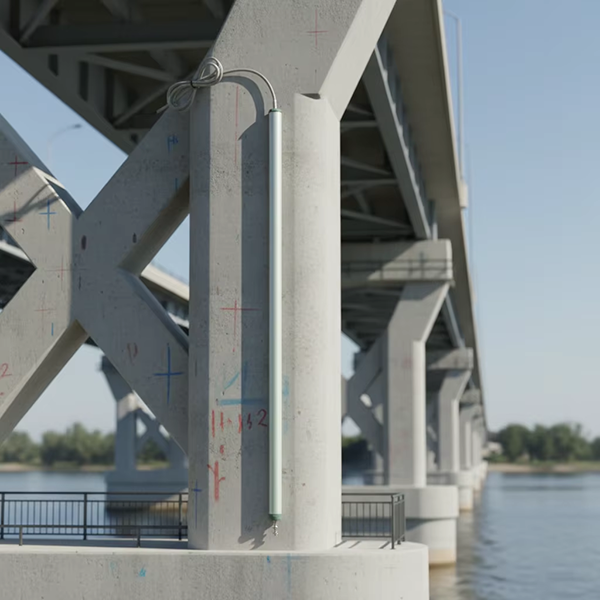
Bridges are the silent lifelines of modern infrastructure, connecting cities, communities, and economies. Yet, beneath their sturdy exteriors, hidden threats like structural cracks can silently compromise their integrity, posing risks to public safety and transportation networks. Enter linear displacement sensors – the unsung heroes revolutionizing bridge crack monitoring and ensuring the longevity of these critical structures.
How Linear Displacement Sensors Work in Bridge Monitoring
Linear displacement sensors are precision instruments designed to measure minute changes in distance with exceptional accuracy. In bridge crack monitoring systems, these sensors are strategically installed along potential crack zones, such as beam joints, support pillars, and concrete decks.
When a crack begins to form or expand, even by a fraction of a millimeter, the sensor detects the subtle shift in position. It converts this physical displacement into an electrical signal, which is then transmitted to a central monitoring station. Advanced software analyzes the data in real-time, providing engineers with detailed insights into crack growth patterns, rate of expansion, and potential structural vulnerabilities.
The Advantages of Linear Displacement Sensors Over Traditional Methods
Traditional bridge inspection methods, such as visual surveys and manual measurements, are not only time-consuming but also prone to human error. They often fail to detect early-stage cracks that could escalate into major safety hazards. Linear displacement sensors, on the other hand, offer continuous, 24/7 monitoring with unmatched precision.
These sensors are highly durable, capable of withstanding harsh environmental conditions including extreme temperatures, heavy rainfall, and constant vibration from passing traffic. Their non-intrusive design means they can be installed without disrupting bridge operations, making them a cost-effective solution for long-term structural health monitoring.
Real-World Impact: Case Studies and Success Stories
In recent years, linear displacement sensors have played a pivotal role in preventing potential bridge disasters. For example, in 2024, a major highway bridge in the Midwest was saved from catastrophic failure when sensors detected a growing crack in one of its main support beams. Engineers were able to intervene promptly, implementing repairs before the crack could compromise the bridge's structural integrity.
Similarly, urban bridges in coastal cities have benefited from these sensors, as they provide early warning signs of corrosion-induced cracks caused by saltwater exposure. By enabling proactive maintenance, linear displacement sensors have not only saved lives but also reduced the long-term costs associated with bridge repairs and replacements.

The Future of Bridge Safety: Innovations in Displacement Sensing Technology
As technology continues to advance, linear displacement sensors are becoming even more sophisticated. The integration of IoT (Internet of Things) capabilities allows for remote monitoring and data analytics, giving engineers instant access to critical information from anywhere in the world. Artificial intelligence algorithms are also being developed to predict crack growth patterns, enabling even more proactive maintenance strategies.
In conclusion, linear displacement sensors are transforming the way we monitor and maintain bridge infrastructure. By providing accurate, real-time data on structural cracks, these sensors are ensuring the safety of millions of commuters and preserving the integrity of our transportation networks. As we look to the future, investing in advanced sensing technology will be key to building and maintaining bridges that can withstand the test of time.